
The Problem With: Income Taxes
Every year, millions of Americans spend billions of collective hours and tens of billions of dollars just trying to comply with federal tax laws. Most people view this as a necessary, if frustrating, civic duty. But when you step back and examine the income tax through the dual lenses of basic economics and Christian stewardship, the entire foundation begins to crack. The issue is not just the rate we pay; it is the moral and structural premise of taxing human production.
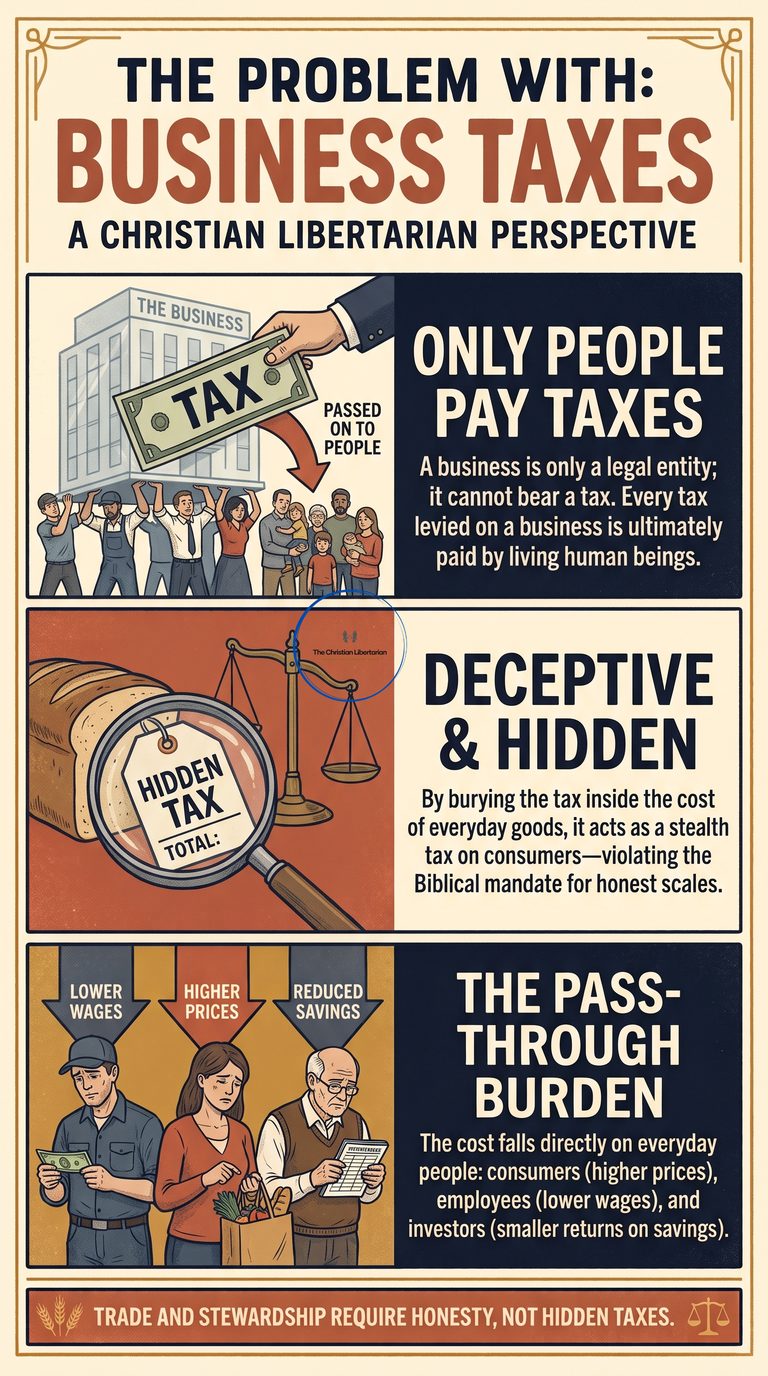
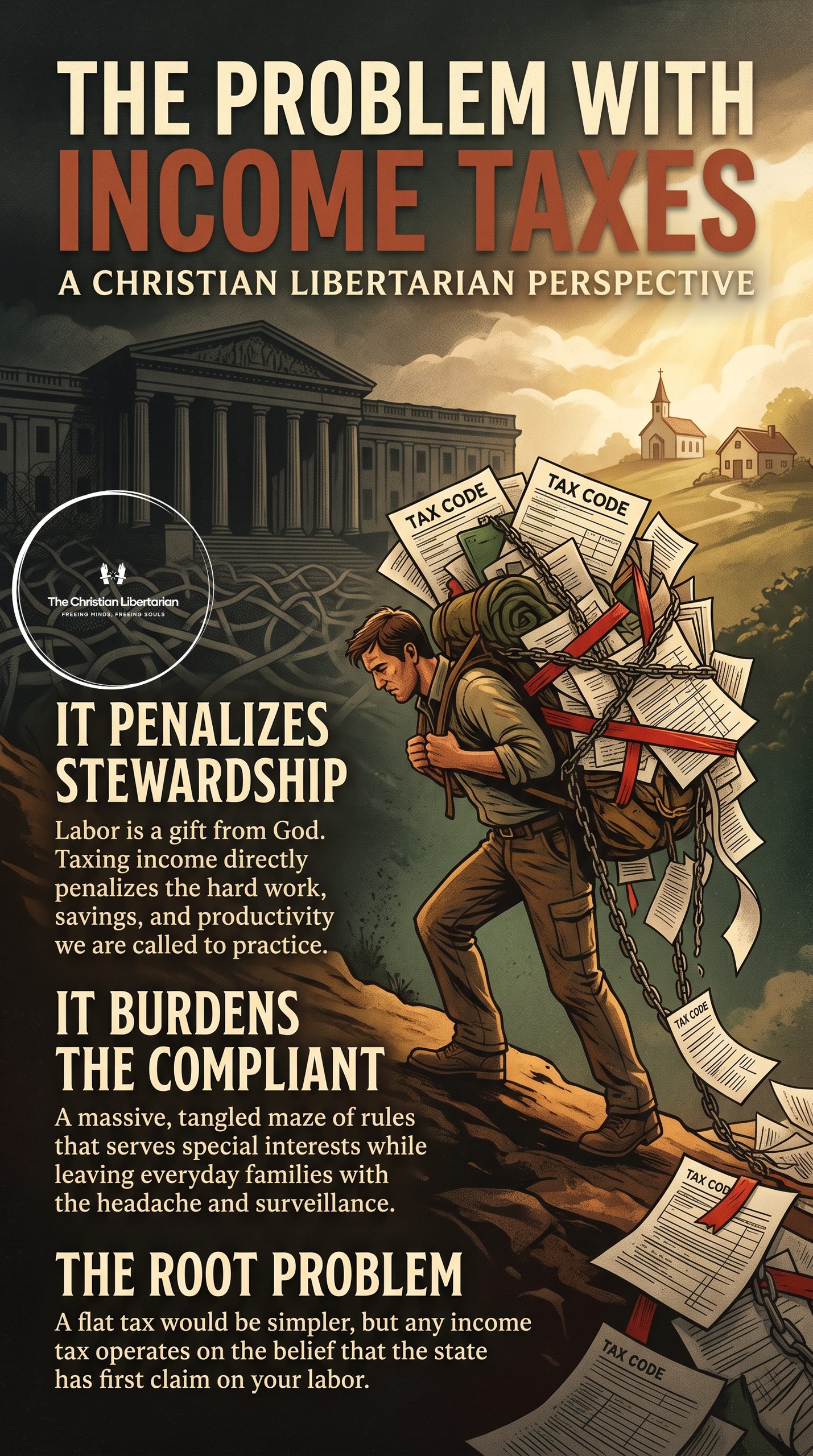
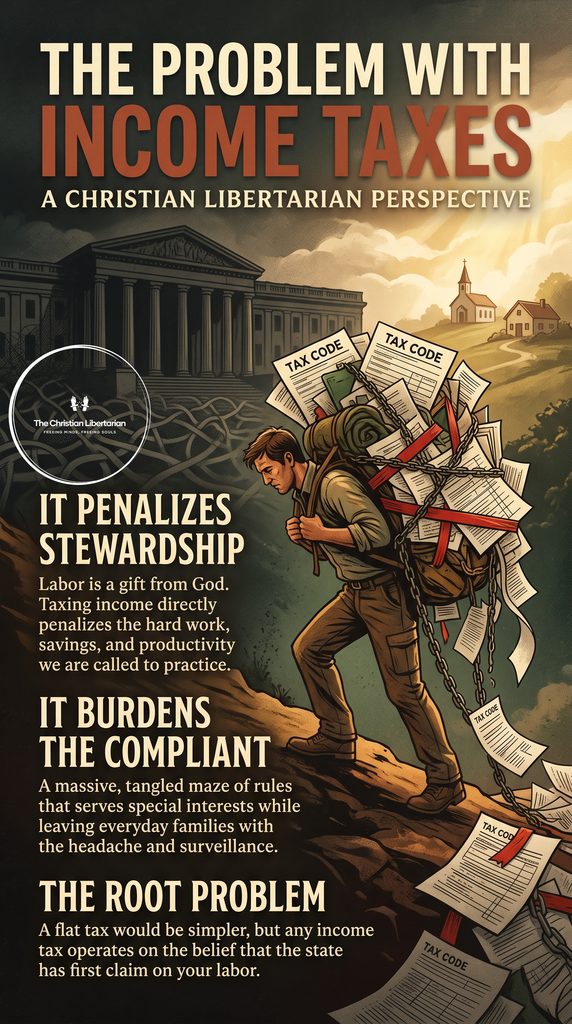
The current system is an irredeemable mess. Spanning thousands of pages of statutes and regulations, the U.S. internal revenue code is fundamentally an engine of political patronage. It is engineered by and for corporate lobbyists, entrenched special interests, and political gatekeepers. Everyday families bear the compliance headache and surveillance of a massive bureaucratic apparatus, while those who can afford armies of accountants game loopholes that were intentionally written for them.
This reality challenges both the political Left and the political Right.
For progressives, the income tax has been elevated to a moral imperative under the banner of “paying your fair share.” But forced state redistribution is not Christian charity. True biblical charity is rooted in voluntary, cheerful giving from the heart, not coerced extraction enforced by state penalties. Progressive tax brackets also codify institutional envy, legally penalizing those who produce more under the guise of equity. Out-sourcing compassion to a sprawling civil bureaucracy does not fulfill the biblical command to love our neighbors; it simply builds dependency and centralizes state control.
Conservatives, on the other hand, are often guilty of superficial posturing. Many conservative politicians complain about high taxes during election season, only to defend a maze of corporate tax write-offs, real estate carve-outs, and agricultural subsidies once in office. Even worse, conservative hawks routinely demand endless hundreds of billions of extracted wealth to fund foreign military interventions, nation-building, and domestic surveillance programs. Too often, the right twists Romans 13 into an unbiblical doctrine of unconditional obedience to state financial extraction, forgetting that Scripture repeatedly warns against civil rulers who claim the first-fruits of the people’s labor and property.
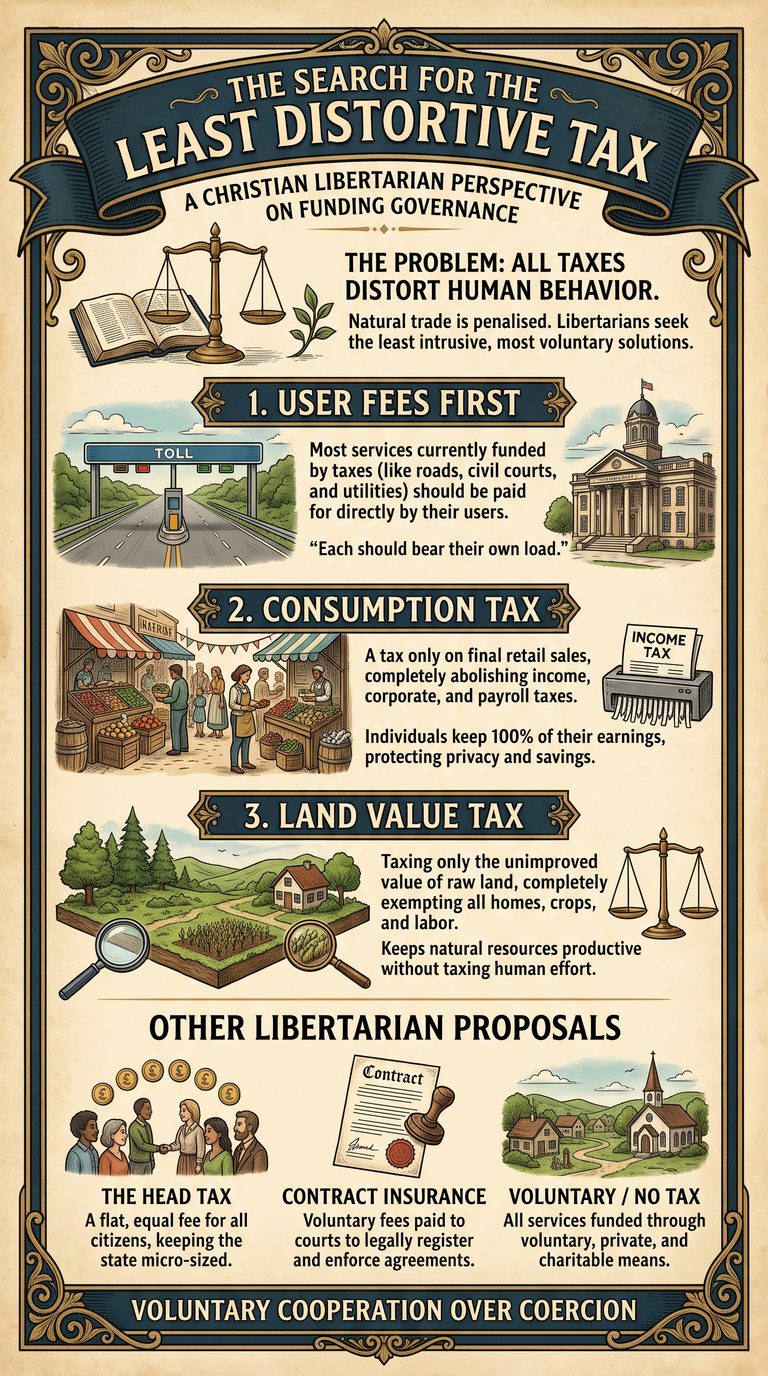
A flat tax would certainly be an improvement over what we endure today. Replacing an incomprehensible tax code with a single, uniform rate filed on a postcard would remove thousands of pages of crony loopholes, strip Washington lobbyists of their leverage, and restore the biblical principle of honest, equal weights and measures across all people.
Yet even a flat tax does not solve the root problem: any income tax fundamentally suppresses the creation of income.
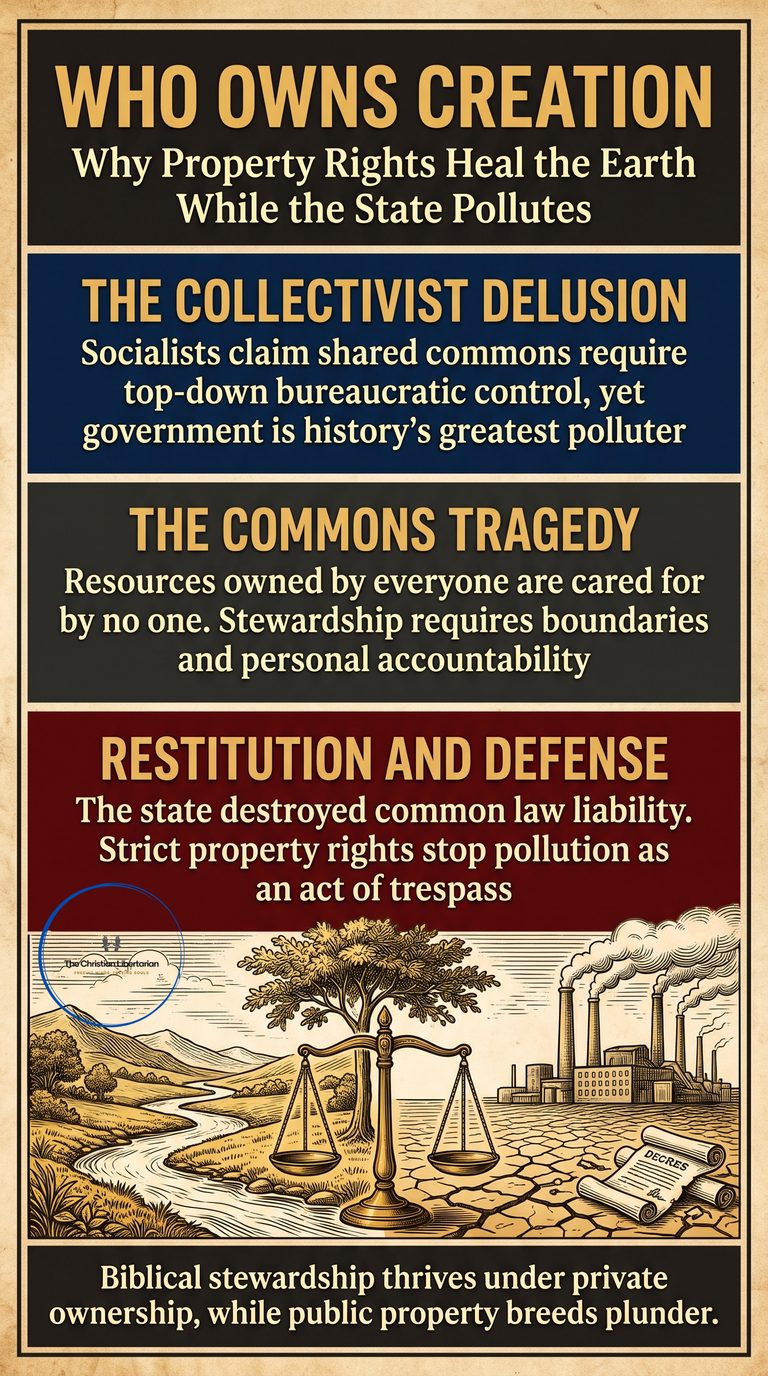
In economics, an immutable rule is that whatever you tax, you get less of. When you place a tax on labor, earnings, and capital accumulation, you directly penalize work, savings, investment, and productivity. An income tax subtly inverts the relationship between the individual and the state. It operates on the legal assumption that the civil government holds a primary ownership stake in your time, energy, and skills, while you are merely allowed an “allowance” or “deduction” of what remains.
In a biblical framework, our time and labor are gifts from God, meant to be stewarded faithfully for our families, churches, and communities. Civil government has a narrowly defined defensive purpose to punish evil and protect peace—not an inherent property right over human productivity. Until we recognize that taxing income penalizes the very stewardship society needs to thrive, reforming the tax code will remain an exercise in rearranging deck chairs on a sinking ship.
Sources & References:
- Tax Foundation:The Cost of Tax Compliance (documenting over 6.5 billion annual hours and upwards of $400 billion spent annually on U.S. federal tax compliance).
- Congressional Budget Office (CBO): Historical data on federal revenue, marginal rates, and economic growth disincentives.
- Economic Analysis: Ludwig von Mises, Human Action (discussions on tax incidence, capital accumulation, and the disincentives of labor taxation); Frédéric Bastiat, The Law (legal plunder versus legitimate defensive justice).
- Scriptural Citations: 1 Samuel 8:10–18 (warnings regarding state extraction of tenths and produce); 2 Corinthians 9:7 (principles of voluntary stewardship versus compulsion); Leviticus 19:35–36 & Proverbs 20:10 (prohibitions against unequal weights, measures, and partiality).