
Draining the value of dollars.
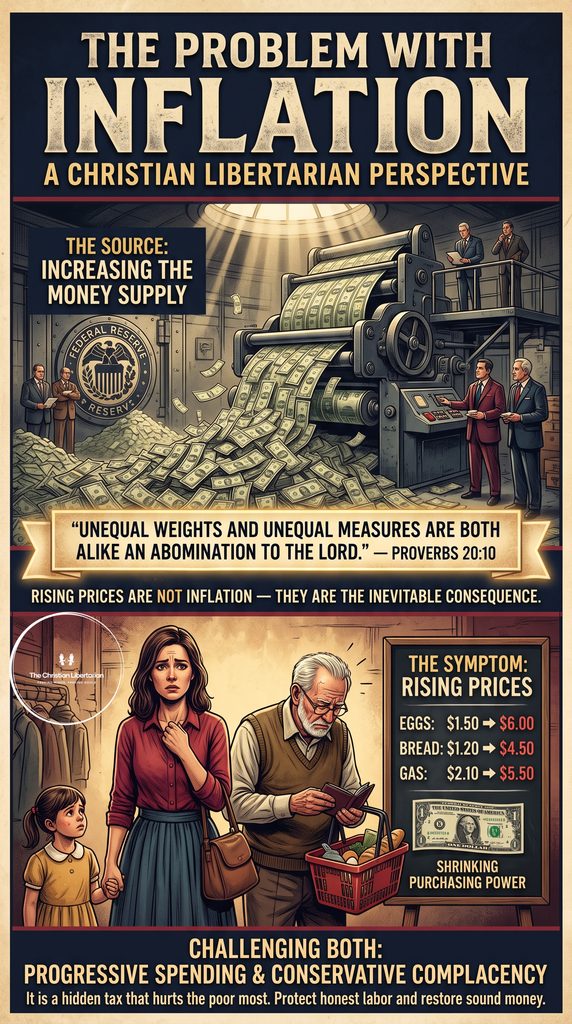
Every time politicians and commentators discuss inflation, they speak as if it were a natural disaster—an unpredictable storm that somehow swept across the grocery aisles and housing markets. They blame supply chains, foreign wars, or the sudden emergence of corporate greed. But inflation is neither an act of nature nor an economic accident. It is a deliberate, man-made moral transgression.
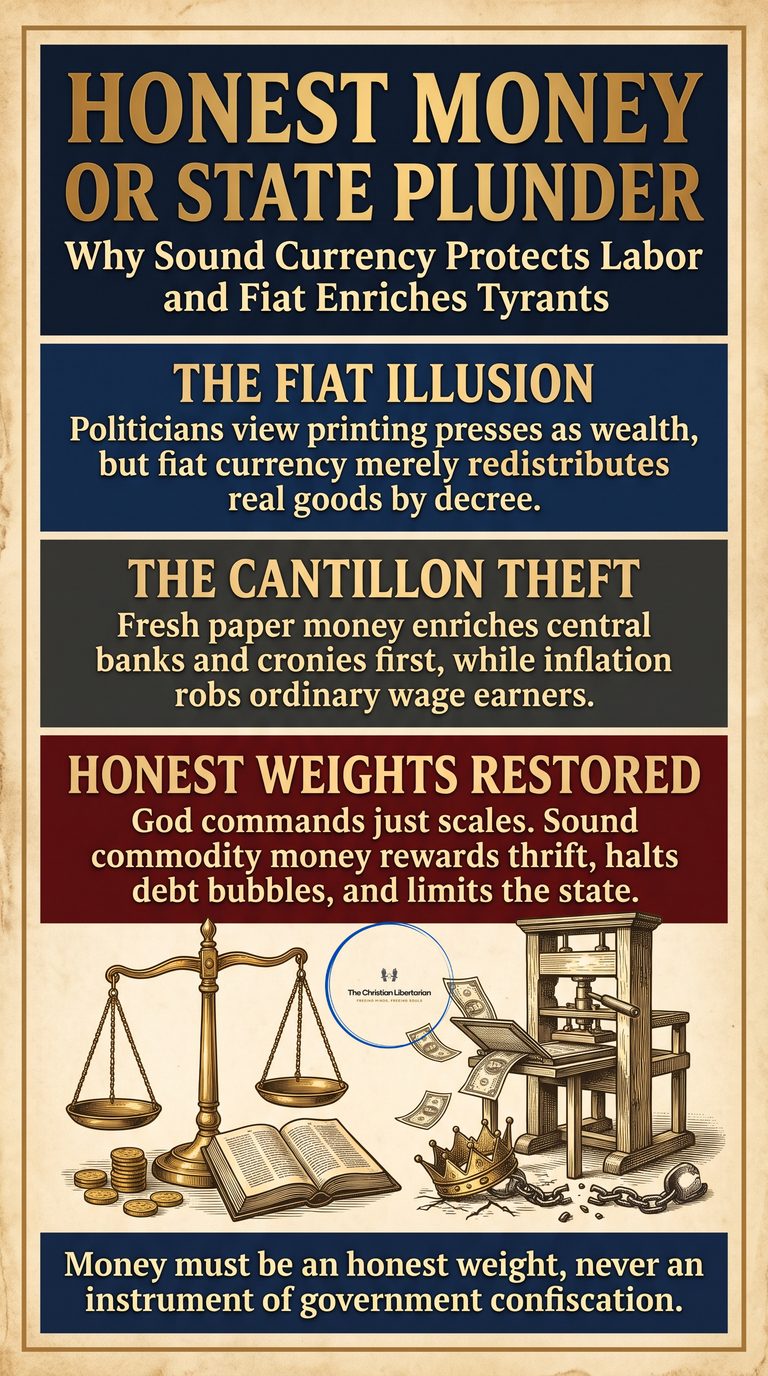
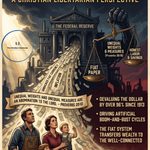
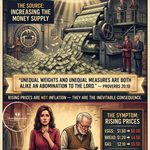
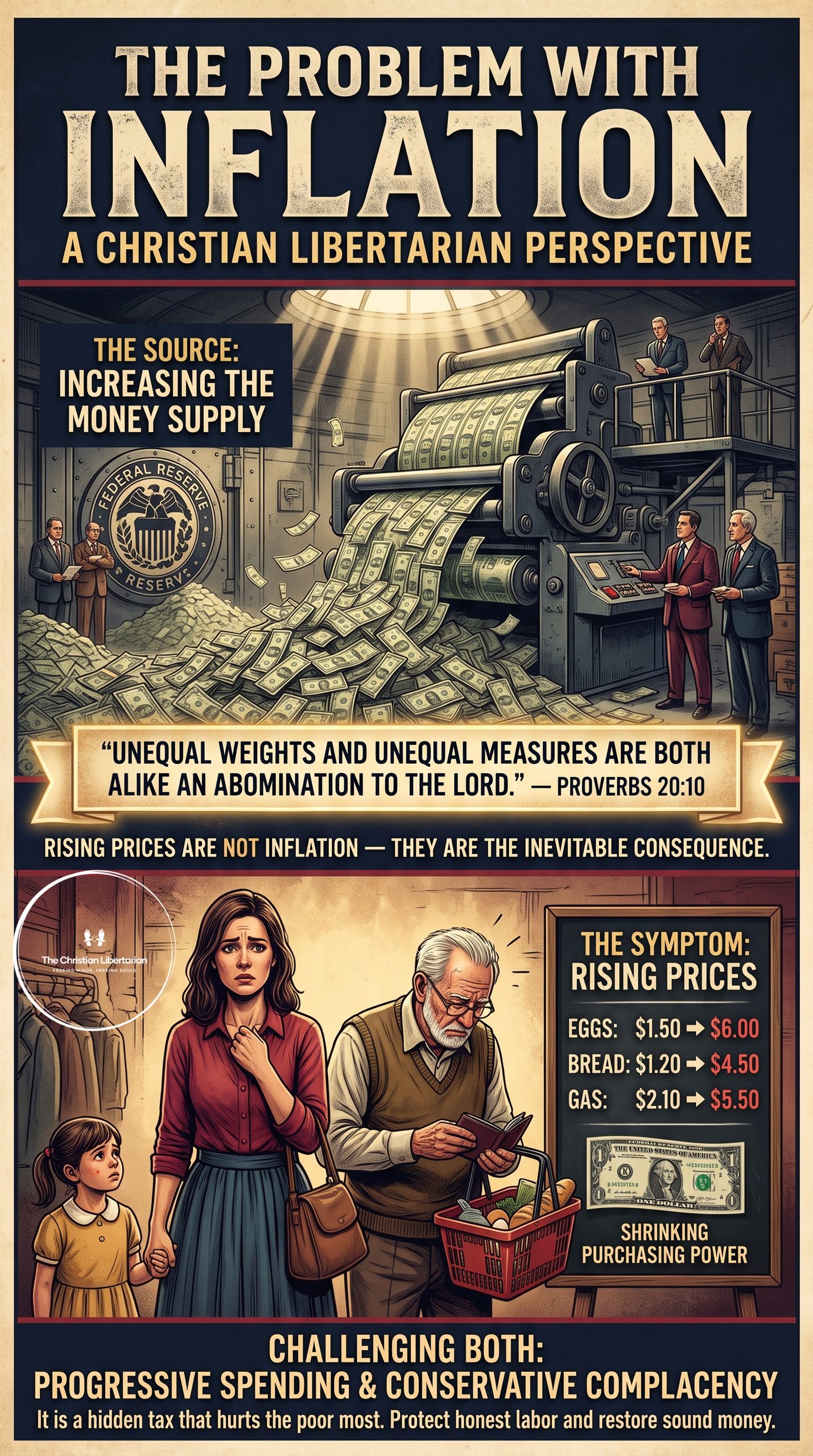
To understand the crisis, we have to cut through a century of semantic deception. Modern economists and media outlets insist that inflation is simply “rising prices.” That is false. Defining inflation as rising prices is like defining pneumonia as a high fever, or arson as rising smoke. Rising prices are not inflation; they are merely the unavoidable consequence of it. In the Austrian economic tradition, inflation has a precise, historical meaning: the artificial expansion of the supply of money and credit unbacked by real production. When the state and the central bank manufacture trillions of digital dollars out of thin air while the actual volume of goods and services remains unchanged, the mathematical outcome is inescapable: every individual dollar represents a smaller slice of reality. The carton of eggs or the tank of gas did not become inherently more valuable; the monetary yardstick used to measure them was shortened.
In biblical ethics, manipulating the measure of value is not a technical policy dispute; it is theft. Proverbs 20:10 is unambiguous: “Unequal weights and unequal measures are both alike an abomination to the Lord.” Leviticus 19:35–36 commands absolute integrity in scales, balances, and measures. In the ancient world, corrupt rulers could not run digital printing presses, so they shaved the edges off coins or diluted precious metals with base iron and copper. The prophet Isaiah delivered a blistering indictment against a decaying nation when he wrote, “Your silver has become dross, your best wine mixed with water” (Isaiah 1:22). Modern monetary policy is coin clipping on an industrial scale. It is a mechanism that confiscates the stored life energy, time, and labor of ordinary citizens without their knowledge or consent.
This process is never neutral. It operates through the Cantillon Effect, meaning new money does not disperse evenly throughout society. It enters the economy at specific points—flowing first to Wall Street banks, government contractors, and institutional asset managers. These privileged recipients spend those newly created dollars at yesterday’s prices, bidding up assets and raw materials.
By the time that expanded money supply filters down to the rest of the country, prices have already spiked. Consider Arthur, a 73-year-old retired machinist living on a fixed pension, and Elena, an hourly home health aide raising two children. Elena does not own commercial real estate, leveraged private equity, or tech stocks that inflate alongside the money supply. Her entire economic existence rests on an hourly wage and a small savings balance. When grocery bills jump 25 percent and rent spikes by hundreds of dollars, Elena cannot instantly reprice her labor; she is left skipping meals or cutting back on medical care. Arthur sits at his kitchen table watching the purchasing power of the dollars he spent forty years accumulating vanish before his eyes. Inflation acts as a brutally regressive, hidden tax that transfers real wealth from the poorest wage earners and retirees directly to the politically connected debtor class.
Both dominant political establishments perpetuate this injustice while shifting blame.
Progressives promote the myth of “greedflation,” insisting that sudden corporate villainy explains high prices. But corporate executives did not magically discover greed in 2021 after being uniquely generous in 2019. If corporate greed drove price inflation, corporate benevolence would be required to explain deflation. This rhetoric is a convenient smoke screen designed to distract from the progressive demand for endless deficit spending, expansive welfare entitlements, and central bank monetization. When their inflationary policies inevitably drive up costs, progressives propose price controls—a failed intervention that historically causes empty shelves, black markets, and shortages, harming the very working-class families they claim to defend.
Conservatives, meanwhile, weaponize inflation on the campaign trail against their opponents while maintaining full complicity in its root causes. Republican administrations have repeatedly approved multi-trillion-dollar budgets, supported debt-financed spending packages, and pressured the Federal Reserve to keep interest rates artificially low to artificially pump equity markets. Conservatives champion protectionist tariffs that actively increase the cost of essential goods, vote for sprawling corporate subsidies, and treat massive defense appropriations funded by newly minted debt as untouchable. Preaching fiscal prudence while endorsing central bank market manipulation and expanding the national debt is political theater, not biblical stewardship.
Inflation is a direct violation of the Eighth Commandment: “You shall not steal.” When the state claims the power to create purchasing power from nothing, it claims the divine prerogative to create value without labor. Honest labor deserves an honest wage, measured by an honest balance.
Immediate Sound Money Action Plan
- Abolish State and Federal Capital Gains Taxes on Monetary Metals
Eliminate all capital gains taxes on physical gold and silver to restore their constitutional role as viable, untaxed alternative currencies. - Repeal Federal Legal Tender Laws
Abolish statutory mandates that compel citizens and businesses to accept depreciating federal fiat notes, thereby enabling market-driven currency competition. - End Federal Reserve Discretionary Money Creation
Prohibit the Federal Reserve from engaging in open-market purchases of Treasury securities, ending the practice of monetizing government debt out of thin air. - Mandate Complete GAAP Accounting for Federal Agencies
Require the federal government to calculate and disclose all budget baselines and entitlement liabilities using standard Generally Accepted Accounting Principles without assuming inflation-based revenue windfalls.
Sources and Documentation
- Biblical Foundations: Proverbs 20:10; Leviticus 19:35–36; Isaiah 1:22; Exodus 20:15 (strict prohibitions against fraudulent measures, monetary dilution, and theft).
- Austrian Monetary Theory: Ludwig von Mises, The Theory of Money and Credit (1912) and Human Action: A Treatise on Economics (1949), defining inflation as the expansion of money and credit and outlining the systematic distortion of price signals.
- Cantillon Effect: Richard Cantillon, Essai sur la Nature du Commerce en Général (1755), detailing how the injection of new money redistributes real wealth to initial spenders at the expense of later recipients.
- Monetary Mechanics and Historical Precedent: F.A. Hayek, Choice in Currency: A Way to Stop Inflation (Institute of Economic Affairs, 1976), demonstrating the necessity of market competition in money to restrain state-driven debasement.
- Empirical Purchasing Power Data: U.S. Bureau of Labor Statistics, Consumer Price Index Historical Series (1913–present), tracking the long-term erosion of dollar purchasing power following sustained monetary expansion.