
The Hazard of the Unexamined Text: Why Proper Hermeneutics Anchors the Christian Faith
Most American households possess multiple copies of the Bible, yet remarkably few believers know how to read the text in front of them. Bibles sit on bedside tables, rest in church pews, and remain permanently accessible on smartphones. We live in an era of unprecedented textual access, but we are drowning in biblical illiteracy. When reading Scripture dissolves into an unguided search for personal impressions, the objective voice of God is quietly replaced by the subjective feelings of the reader. Without an established grammatical and historical framework to interpret an ancient, divinely inspired collection of sixty six books, personal intuition becomes the final court of arbitration. This subtle shift leaves modern believers defenseless against theological drift, moral confusion, and spiritual instability.
I have been taking some graduate level seminary classes over the last several years, and my church has been actively training me to exegete and preach Scripture. It is a deeply humbling discipline. Learning to research words in the original biblical languages, diagram sentence structures, and trace covenantal themes across redemptive history quickly cures a person of intellectual arrogance. Yet online, particularly on our Christian libertarian Facebook page, I cannot count how many times people have told me that I do not know my Bible and that I do not interpret it correctly.
These interactions are instructive because they reveal a widespread, cultural misunderstanding of what biblical interpretation actually requires. In modern digital discourse, knowing your Bible has largely been reduced to weaponizing isolated proof texts to defend predetermined opinions. If a verse sounds vaguely supportive of our preferred social cause, personal grievance, or partisan perspective, we feel entitled to rip it from its paragraph, ignore its original author, and declare that the Holy Spirit has validated our stance. When anyone challenges that interpretation, the conversation immediately turns hostile.
The Historic Reformed Approach to the Word
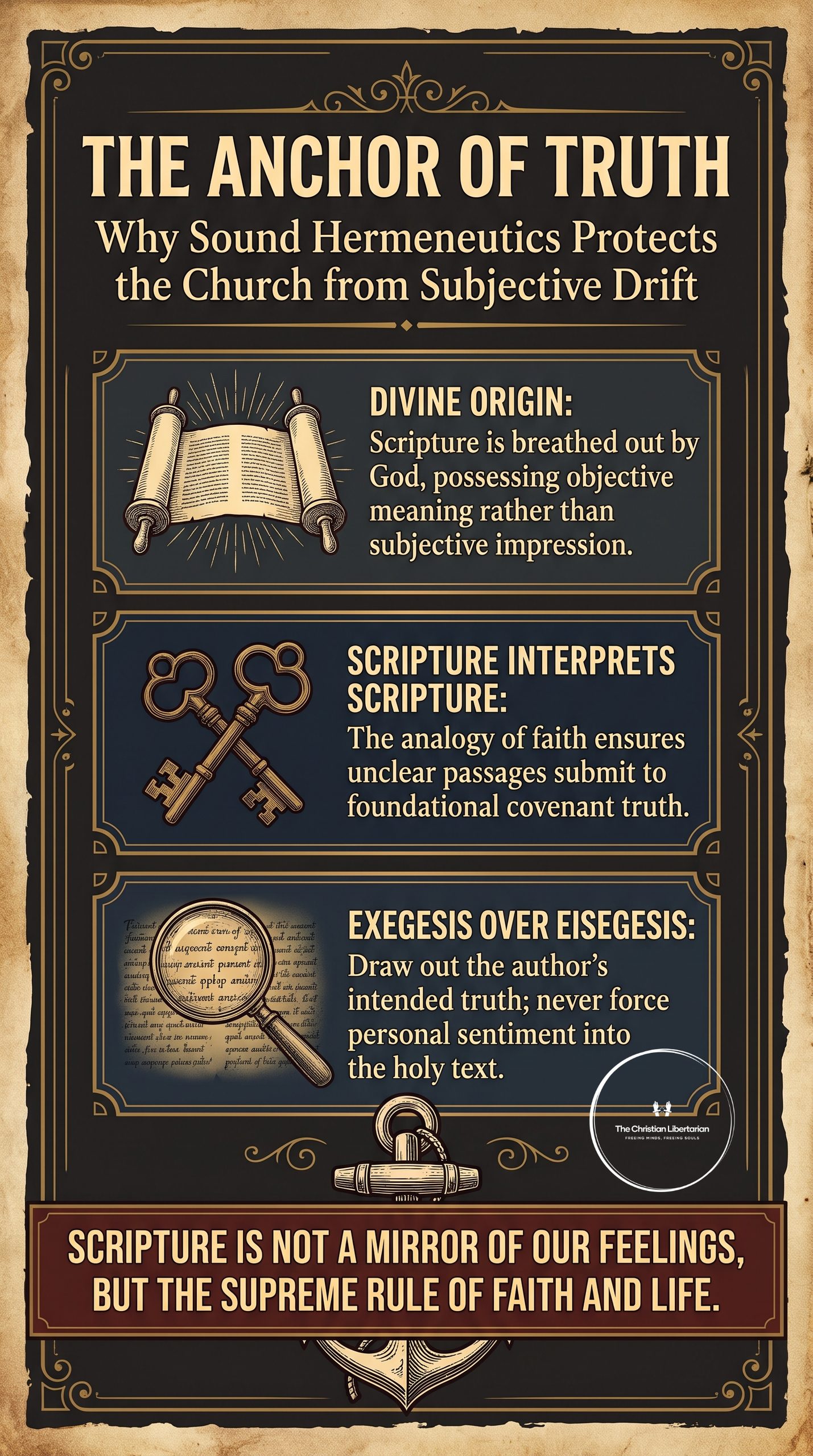
A historic Reformed approach to the Bible stands in stark opposition to this modern individualism. It begins with two foundational convictions: divine inspiration and biblical perspicuity, which is the essential clarity of God’s Word.
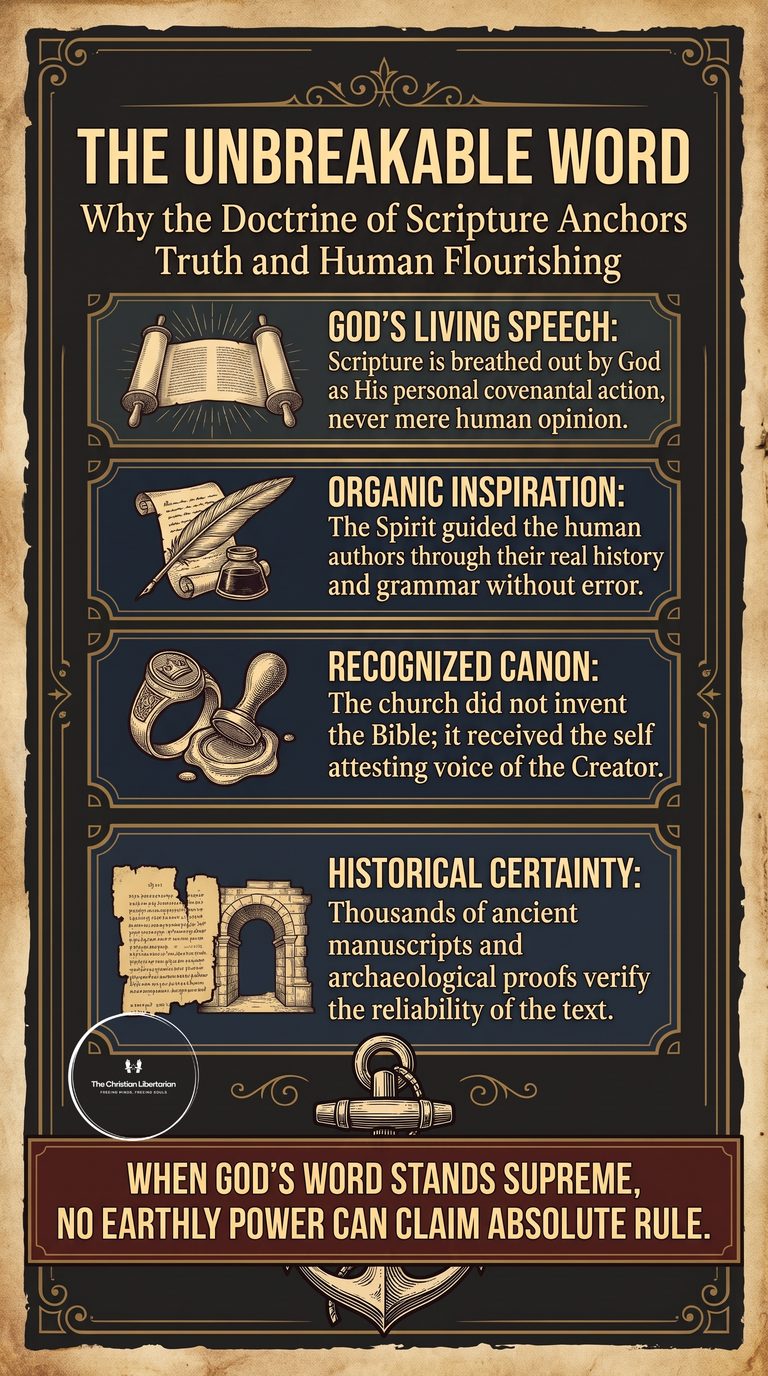
When the Apostle Paul wrote to Timothy that all Scripture is breathed out by God, he affirmed that every biblical text possesses an objective meaning intended by the Holy Spirit. Scripture does not become divine truth only when it produces a warm emotional stir within a contemporary reader. It remains the unchanging truth of God because the living God spoke it through chosen human instruments.
Because God is a God of order and truth who does not contradict Himself, the Reformers championed the foundational principle known as the analogy of faith. Simply stated, Scripture interprets Scripture. Clear, didactic passages must always govern our understanding of obscure, poetic, or difficult ones. No single verse can be interpreted in isolation from the broader canon of redemptive history, which finds its culmination and fulfillment in the person and work of Jesus Christ.
Furthermore, God chose to communicate through real human authors who lived in specific historical cultures, spoke distinct languages, and wrote within specific literary genres. The biblical text contains historical narrative, civil law, covenantal promises, Hebrew poetry, prophetic visions, wisdom literature, and pastoral letters. Each of these genres operates under distinct literary rules.
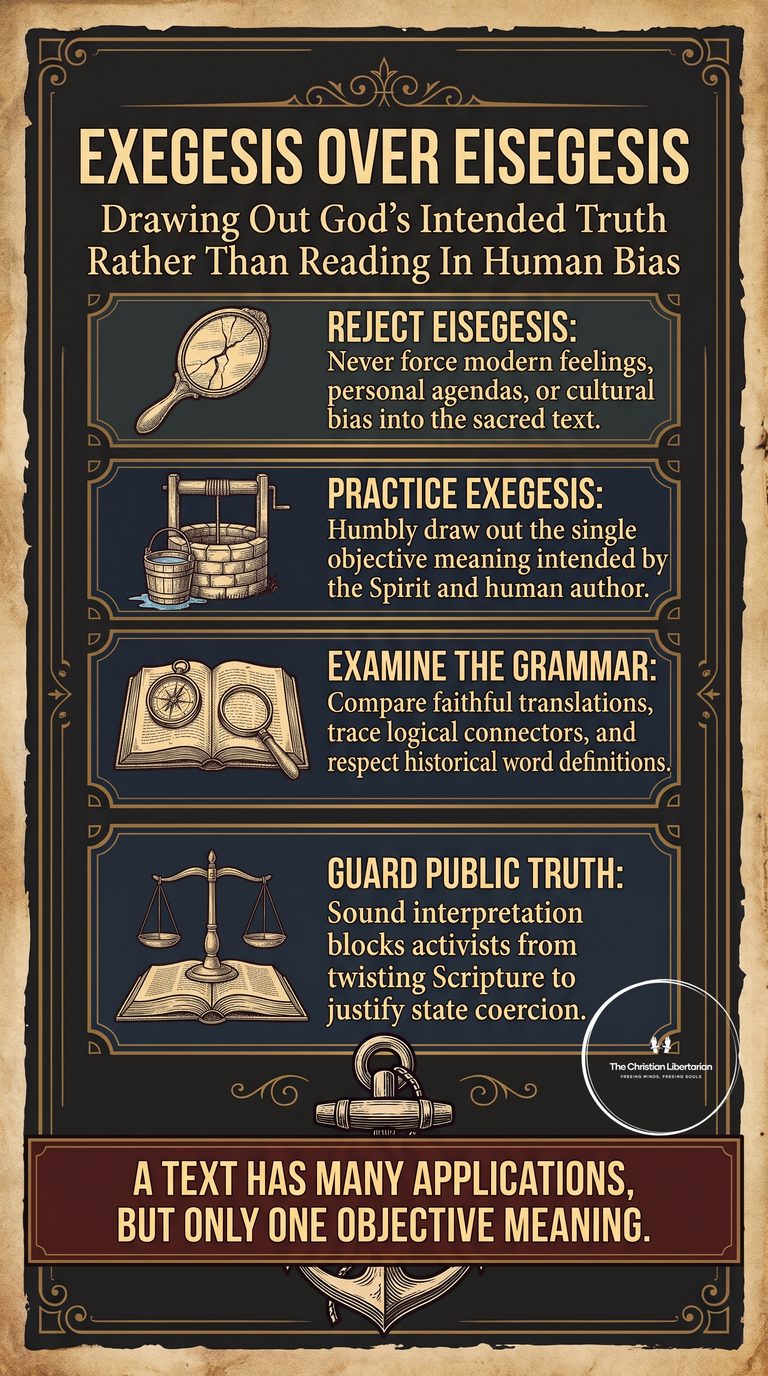
When readers bypass grammatical and historical analysis to ask immediately what a verse means to them personally, they practice eisegesis. Eisegesis is the dangerous habit of reading personal assumptions, cultural biases, and modern definitions into the ancient text. Faithful biblical discipleship demands exegesis. Exegesis is the humble, rigorous work of drawing out the author’s original, God given meaning under the illuminating guidance of the Holy Spirit. Until we know what a text meant to its original hearers, we have no authority to declare what it means for our lives today.
Consider the classic example of the Berean Jews recorded in Acts chapter seventeen. When the Apostle Paul arrived in their synagogue, the Bereans did not evaluate his gospel proclamation by his rhetorical charisma, his apostolic pedigree, or his personal appeal. Luke records that they were of more noble character than those in Thessalonica because they received the word with all eagerness, examining the Scriptures daily to see if these things were so. The Bereans possessed both the humility to listen and the hermeneutical discipline to test teaching against the written Word. Had they lacked that objective standard, they could never have distinguished divine revelation from human deception.
The Measurable Crisis in the Modern Church
When congregations abandon grammatical, historical exegesis, the spiritual consequences are severe and measurable. The modern church is living through an intellectual and doctrinal collapse, confirmed by rigorous sociological and theological research.
According to the American Worldview Inventory conducted by Dr. George Barna at the Cultural Research Center at Arizona Christian University, only 4 percent of American adults possess a coherent biblical worldview. Among young adults in Generation Z, that number sits at a heartbreaking 1 percent. Over 85 percent of Americans belong to what the study defines as World Citizens, people whose beliefs and behaviors represent an eclectic, syncretic blending of secularism, moralism, and postmodernism rather than biblical fidelity. Even among adults attending evangelical Protestant congregations, only 11 percent hold a consistent biblical worldview.
The nationwide State of Theology research, conducted biennially by Ligonier Ministries and LifeWay Research, exposes an astonishing doctrinal rot inside professing evangelicalism:
- 53 percent of American evangelicals agree that everyone sins a little, but most people are good by nature, flatly denying the biblical reality of original sin and total depravity.
- 64 percent affirm the statement that everyone is born innocent in the eyes of God.
- 53 percent believe that the Holy Spirit is merely an impersonal force rather than the third person of the Triune Godhead.
- 47 percent believe that God accepts the worship of all religions, including Christianity, Judaism, and Islam, directly undermining the exclusive claims of Jesus Christ.
- Nearly a third of churchgoers struggle to identify the basic chronological storyline of the biblical covenants, confusing cultural sayings with the Ten Commandments.
Meanwhile, the American Bible Society reports in its annual State of the Bible research that regular Scripture engagement has cratered, with only a small minority of churchgoers opening their Bibles outside of Sunday morning services. When people do not read the text, they cannot understand it. When they do not understand it, they absorb the prevailing values of secular culture while continuing to use religious vocabulary.
The Downstream Ramifications for Law, Economics, and Culture
This widespread biblical illiteracy is not merely an internal ecclesiastical tragedy. What happens within the sanctuary inevitably spills over into the public square. When a culture loses its theological foundations, the downstream ramifications in our legal, economic, and political spheres are devastating.
The American legal tradition and the concept of constitutional limits were built directly upon biblical anthropology. The Scriptures teach that human beings bear the divine image, conferring an objective dignity and moral agency that no human institution may lawfully usurp. At the same time, Scripture warns that all human beings are fallen, corruptible, and prone to self exaltation. When a society forgets the reality of human depravity, it becomes remarkably naive about the dangers of unchecked power. Citizens begin to look to civil rulers for salvation, security, and sustenance, granting state actors unprecedented authority to regulate daily life.
In the realm of economics, biblical illiteracy has blinded entire generations to basic moral boundaries. God’s moral law strictly forbids theft, dishonest scales, and coveting what belongs to one’s neighbor. When believers do not understand these commands in their broader biblical and covenantal context, they fail to recognize how currency debasement, institutional debt, and state enforced wealth confiscation violate God’s righteous standards. They end up cheering for public policies that harm the poor, dilute the currency, and burden future generations with unpayable debt, all while believing they are practicing Christian compassion.
When the church loses the ability to interpret the Bible faithfully, it loses its prophetic voice. A biblically illiterate church cannot hold civil rulers accountable to justice, cannot defend the sacred jurisdiction of the family, and cannot provide a moral defense for individual liberty. It simply mirrors the ideological fads of the surrounding culture.
Recovering sound hermeneutics is therefore an urgent spiritual and cultural necessity. We must return to the hard, joyful work of studying Scripture with grammatical care, historical awareness, and covenantal depth. When we submit our feelings to the objective revelation of God, the Bible ceases to be a playground for personal opinion and becomes once again the supreme rule of faith and life.
Sources and References
- Holy Scripture: Genesis 1:26 through 27; Exodus 20:15 through 17; Psalm 119:105; Proverbs 11:1; Acts 17:10 through 12; Romans 3:10 through 23; 2 Timothy 3:16 through 17; 2 Peter 1:20 through 21
- Confessional Standards: Westminster Confession of Faith, Chapter 1 (Of the Holy Scripture); Belgic Confession, Articles 3 through 7
- Cultural Research Center at Arizona Christian University, American Worldview Inventory, Annual Reports by Dr. George Barna (2024 through 2026)
- Ligonier Ministries and LifeWay Research, The State of Theology Survey, Research Reports and White Papers (2024 through 2026)
- American Bible Society, State of the Bible USA, Annual Research Reports (2024 through 2026)
- Herman Bavinck, Reformed Dogmatics, Volume 1: Prolegomena, Holy Scripture
- J.I. Packer, Fundamentalism and the Word of God