
The Unbreakable Word: Why the Doctrine of Scripture Anchors Truth and Human Flourishing
In our first installment of this series on studying the Bible, we examined how widespread biblical illiteracy has left the modern church vulnerable to emotionalism and cultural drift. Yet before we move into the specific tools of grammar, history, and literary genre, we have to lay the proper foundation. Why should we give this ancient book supreme authority over our lives in the first place? What actually is the Bible, how did it come into our hands, and why should any rational person trust it?
If you spend any time in modern religious discussions, you will quickly encounter two common errors regarding the nature of the Bible. On one side sits the skeptical progressive view, which treats Scripture merely as a human record of ancient people trying to figure out who God is. In that framework, the Bible is full of cultural blind spots and outdated opinions that modern readers must correct. On the other side sits a shallow superstitious view, which treats the Bible as if it fell out of the sky on golden plates, completely detached from real human history, language, and grammar.
Both of these errors destroy meaningful Bible study. If the Bible is merely human opinion, there is no reason to submit to it. If it is detached from human history and grammar, there is no way to exegete it. Historic Reformed orthodoxy gives us a far richer, profoundly biblical doctrine of Scripture.
God Speaking: The Insights of Ward, Warfield, and Bavinck
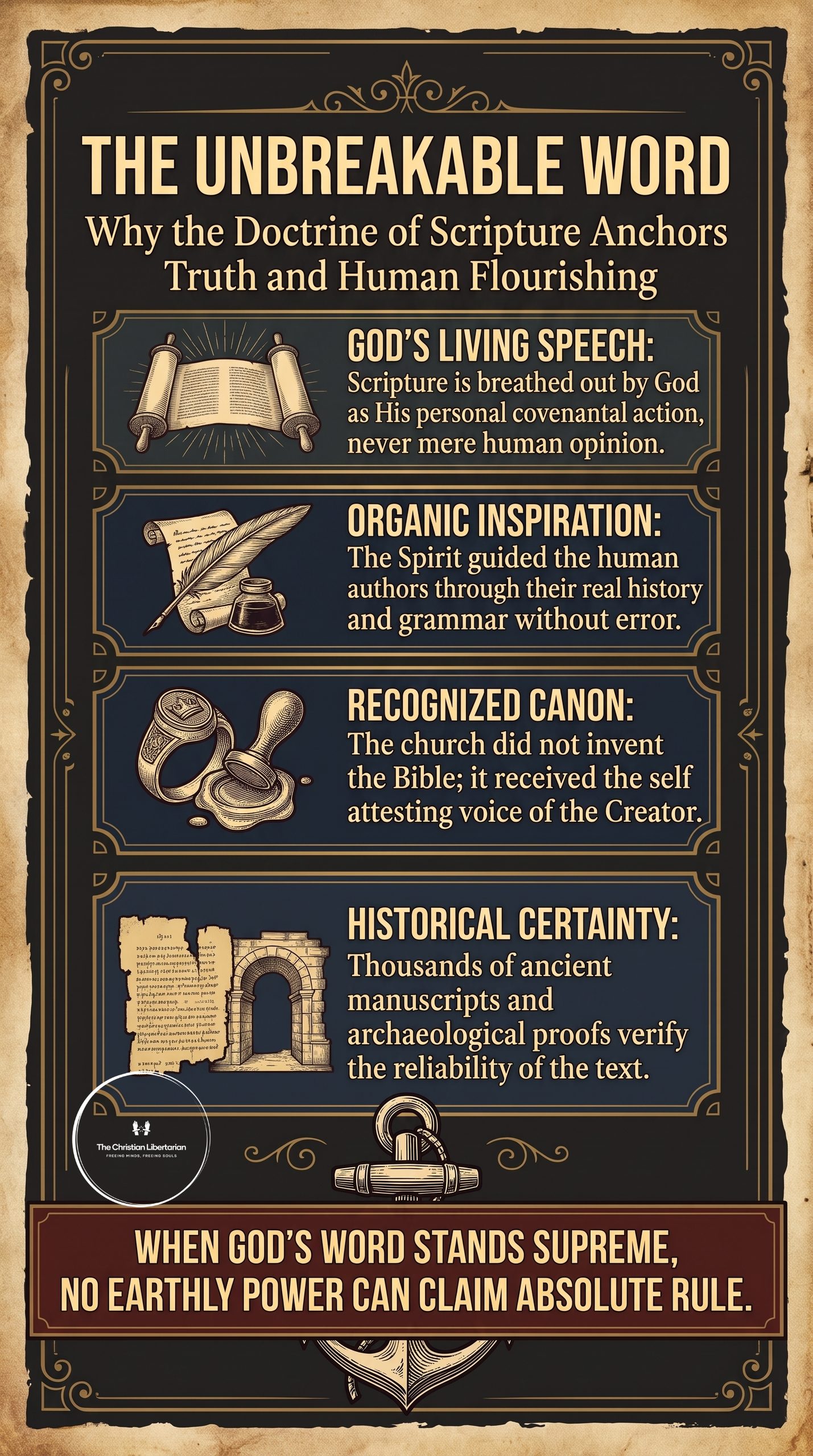
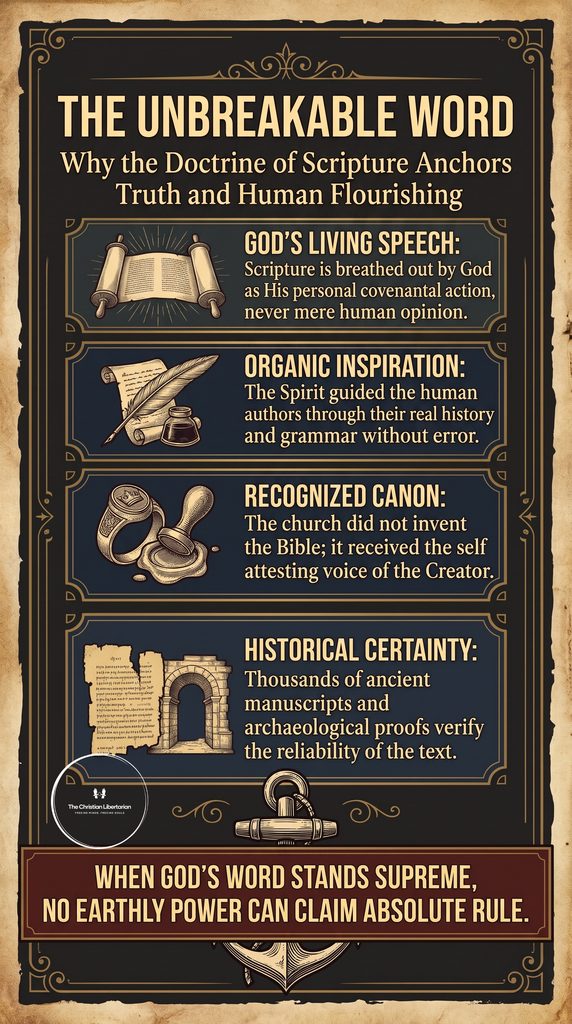
To understand what the Bible is, we should begin with how Scripture presents itself. In his insightful work Words of Life, theologian Timothy Ward demonstrates that the Bible is fundamentally a divine speech act. Throughout redemptive history, God relates to His creatures through verbal covenants. When God speaks, He does not merely transmit abstract trivia; He performs an action. He creates, He commands, He promises, He judges, and He pardons. Ward shows that the written Scriptures are the permanent, spirit empowered instrument of God’s personal communicative action. Because the Holy Spirit authored the text and continues to speak through it, the authority of Scripture is identical to the authority of God Himself. To disobey or dismiss the text of Scripture is to disobey or dismiss God personally.
This understanding rests upon the monumental scholarship of two towering Reformed theologians of the late nineteenth and early twentieth centuries: B.B. Warfield and Herman Bavinck.
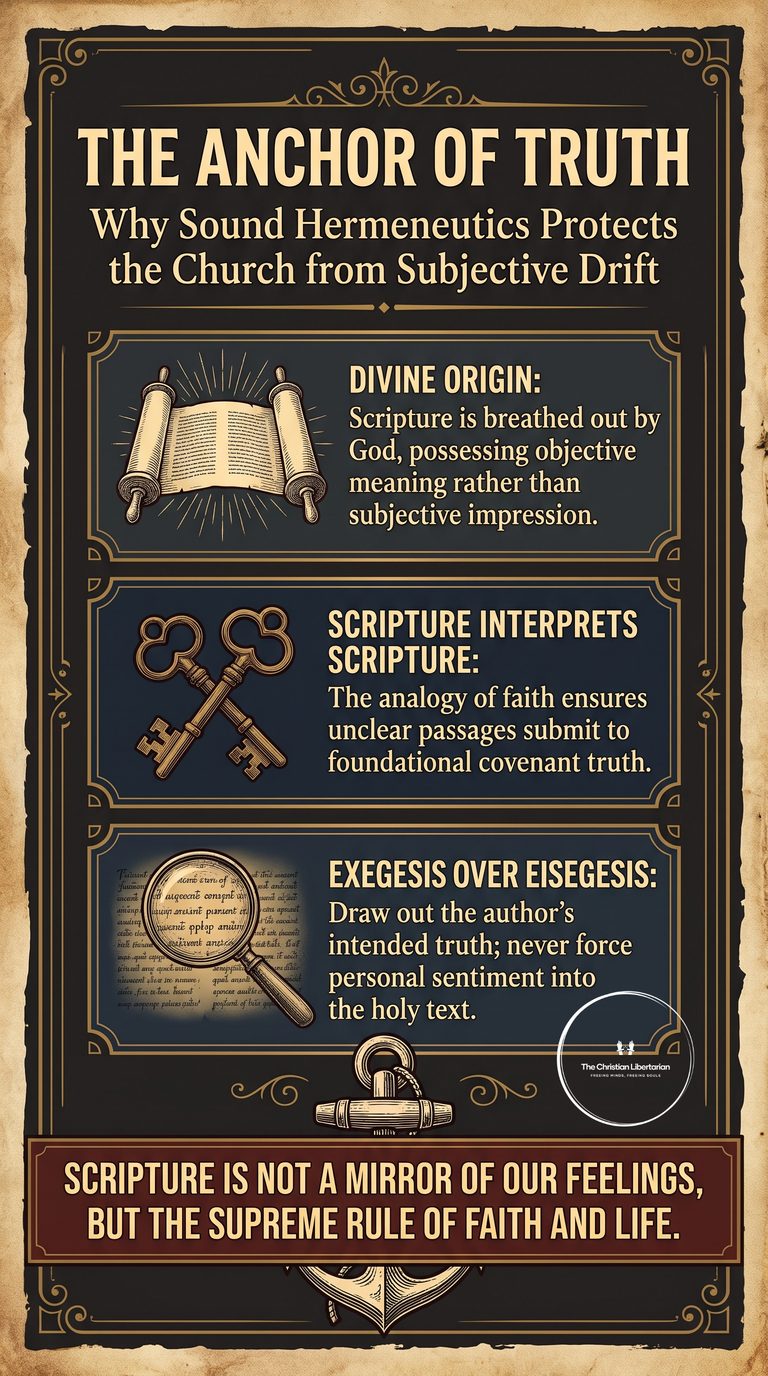
In The Inspiration and Authority of the Bible, Warfield conducted an exhaustive examination of what Jesus and the apostles actually taught regarding the Old and New Testaments. Warfield focused heavily on 2 Timothy 3:16, where Paul declares that all Scripture is breathed out by God. Warfield pointed out that the Greek term does not mean God took human writings and breathed spiritual life into them. Rather, it means that Scripture is the very product of God’s creative breath.
Warfield highlighted a remarkable pattern across the New Testament. In passages such as Romans 9:17 and Galatians 3:8, the biblical writers write phrases like “the Scripture says to Pharaoh” or “the Scripture foresaw that God would justify the Gentiles.” Elsewhere, texts spoken directly by God in Genesis are introduced in the New Testament simply as what “the Creator said,” even when those words were written by the narrative hand of Moses. For Jesus and the apostles, what Scripture says, God says. Warfield explained this dual authorship through the doctrine of concurrence. By God’s exhaustive providence, He prepared the human authors from birth so that they wrote freely out of their own intellect and experience, yet every single word they penned was simultaneously the exact word intended by God.
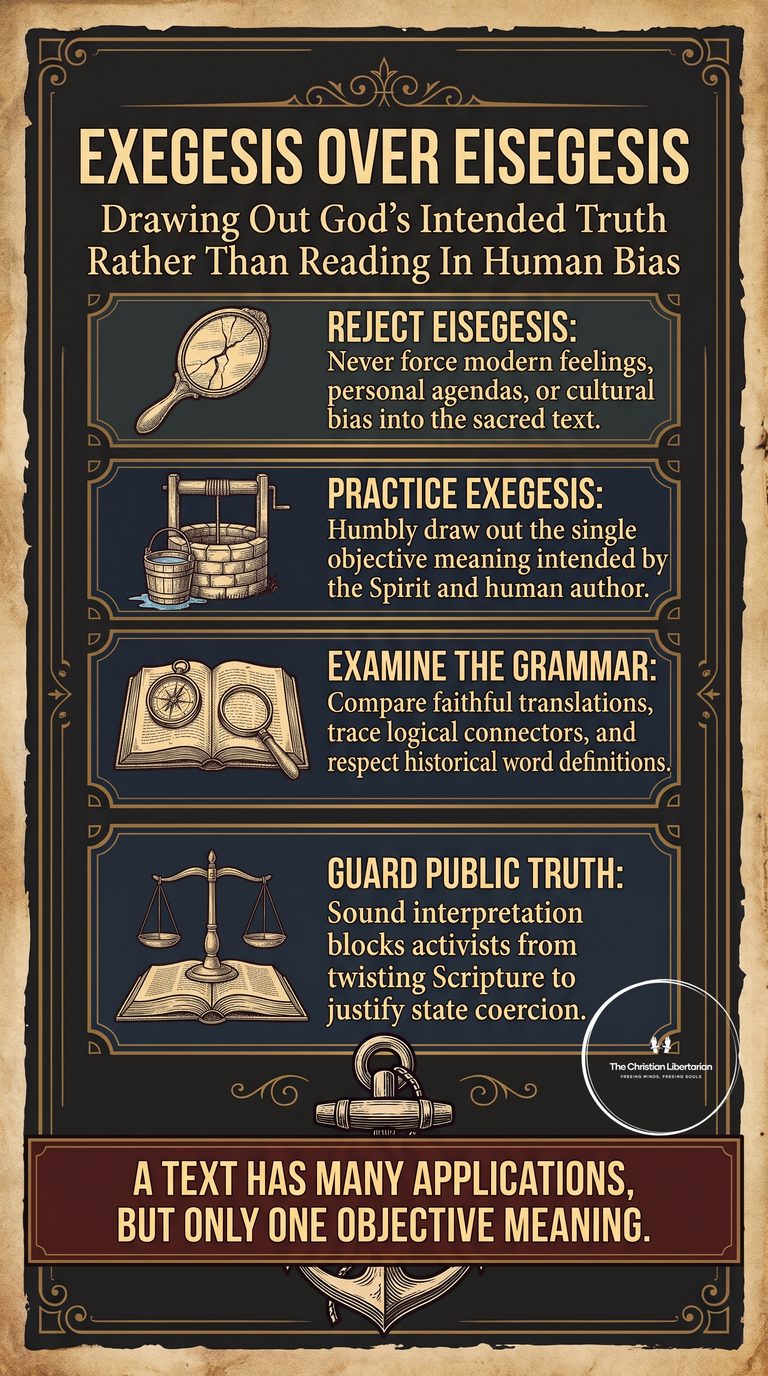
Herman Bavinck complemented Warfield in the first volume of his Reformed Dogmatics by developing the concept of organic inspiration. Bavinck fiercely opposed the mechanical theory of inspiration, which viewed the biblical writers as passive stenographers taking dictation in a trance. Instead, Bavinck argued that the Holy Spirit worked organically in and through the human faculties of the authors. Luke conducted careful historical interviews (Luke 1:1-4). Paul reasoned from fierce theological conviction and pastoral sorrow. David poured out his soul in raw poetic grief. The Holy Spirit entered into the very humanity of these writers, utilizing their vocabulary, education, and cultural settings without erasing their personalities, while guarding their final written output from all error. Because inspiration is organic, diligent historical and grammatical study is not a threat to faith; it is essential to honoring how God chose to speak.
Self Attestation and the Formation of the Canon
If Scripture is the organic, breathed out Word of God, a natural question arises: How do we know which books belong in the Bible? Critics frequently claim that the biblical canon was an arbitrary political invention of fourth century church councils or Roman emperors seeking to consolidate power.
Both historical reality and Reformed theology refute this myth. Following John Calvin, Herman Bavinck emphasized that Scripture is self attesting. Because the Bible is the speech of the supreme Creator, there is no higher court of appeal in the universe that can stand above the Bible to validate it. If the Bible required the institutional church or human philosophy to grant it authority, then the church or human philosophy would possess higher authority than God’s Word.
Consequently, the early church did not create the canon; the church recognized and received the canon. Consider an everyday illustration. In this hypothetical scenario, imagine an art expert examining a newly discovered painting by Rembrandt alongside several amateur forgeries. When the expert identifies the true Rembrandt, he does not make the painting a masterpiece by his declaration. He simply recognizes the inherent brilliance, brushstroke, and signature that the artist already placed within the work.
In the same way, the sixty six books of the Old and New Testaments possessed canonical authority the exact moment they were written by God’s prophets and apostles. Jesus Himself affirmed the established threefold division of the Hebrew Old Testament in Luke 24:44, referencing the Law of Moses, the Prophets, and the Psalms while holding the Pharisees accountable to the written text, while utterly rejecting their man made oral traditions. In the New Testament, the apostles knew they were writing authoritative revelation (1 Corinthians 14:37; 1 Thessalonians 2:13), and Peter explicitly placed Paul’s letters on par with the Old Testament Scriptures in 2 Peter 3:15-16. The early church councils simply acknowledged the books that already bore the marks of apostolic origin, doctrinal harmony, and the self attesting voice of Christ through the inward testimony of the Holy Spirit.
Historical Verification: Evidence That Demands a Verdict
While the ultimate persuasion of the heart belongs to the Holy Spirit, the Christian doctrine of Scripture never asks us to check our brains at the door. Because God spoke in real space and time, His Word invites rigorous historical investigation.
In his landmark apologetic work The New Evidence That Demands a Verdict, Josh McDowell compiled overwhelming documentary and archaeological proof demonstrating that the Bible is the most historically reliable document from the ancient world. When historians evaluate the textual reliability of any ancient writing, they apply the bibliographical test, which examines how many manuscript copies survive and how close those copies are to the original composition.
The numbers are staggering:
- For classical works of history that no modern scholar questions, such as the writings of Tacitus, Plato, or Julius Caesar, we possess only a tiny handful of surviving manuscripts, typically written between eight hundred and fourteen hundred years after the original authors died.
- By contrast, for the New Testament alone, scholars have cataloged over 5,800 Greek manuscripts, over 10,000 Latin manuscripts, and more than 9,000 manuscripts in other ancient languages such as Syriac, Coptic, and Armenian.
- The time gap between the original New Testament autographs and our earliest surviving fragments, such as the John Rylands Papyrus of John’s Gospel, is less than a single generation, dating to within a few decades of the Apostle John’s death.
- Even if every single copy of the New Testament were destroyed today, scholars could reconstruct virtually the entire text simply from the tens of thousands of quotations preserved in the writings of the early church fathers of the second and third centuries.
Furthermore, archaeology has repeatedly vindicated the precision of the biblical writers. From the discovery of the Dead Sea Scrolls confirming the extraordinary preservation of the Old Testament text across a millennium, to inscriptions verifying the exact civic titles of Roman officials recorded by Luke in the book of Acts, the empirical evidence confirms that the Bible is anchored in verifiable history.
The Legal, Economic, and Political Ramifications
Understanding the Doctrine of Scripture is never merely an academic exercise for seminary classrooms. What a civilization believes about the nature and authority of God’s Word determines whether that society will live in freedom or slide into servitude.
From a legal perspective, an objective, inerrant Bible establishes a transcendent standard of justice above the state. If God has spoken a permanent moral law in Scripture, then human rulers, legislatures, and judges are not the creators of law; they are subjects under the law. When a society abandons the authority of Scripture, law degenerates into legal positivism, which is the belief that whatever the state decrees is right simply because the state holds a monopoly on force. Only an unbreakable divine Word can look at a corrupt statute or an abusive regime and declare that legalized plunder is still theft in the sight of God.
From an economic perspective, the authority of Scripture safeguards human flourishing and peaceful exchange. Because the Bible is the unchanging Word of the Creator, its commands regarding private property, voluntary stewardship, and honest weights and measures are non negotiable moral boundaries. When the church compromises on the authority of Scripture, it loses the clarity required to condemn institutional theft, whether that theft takes the form of predatory taxation, corporate cronyism, or the hidden confiscation of wealth through currency debasement and inflation.
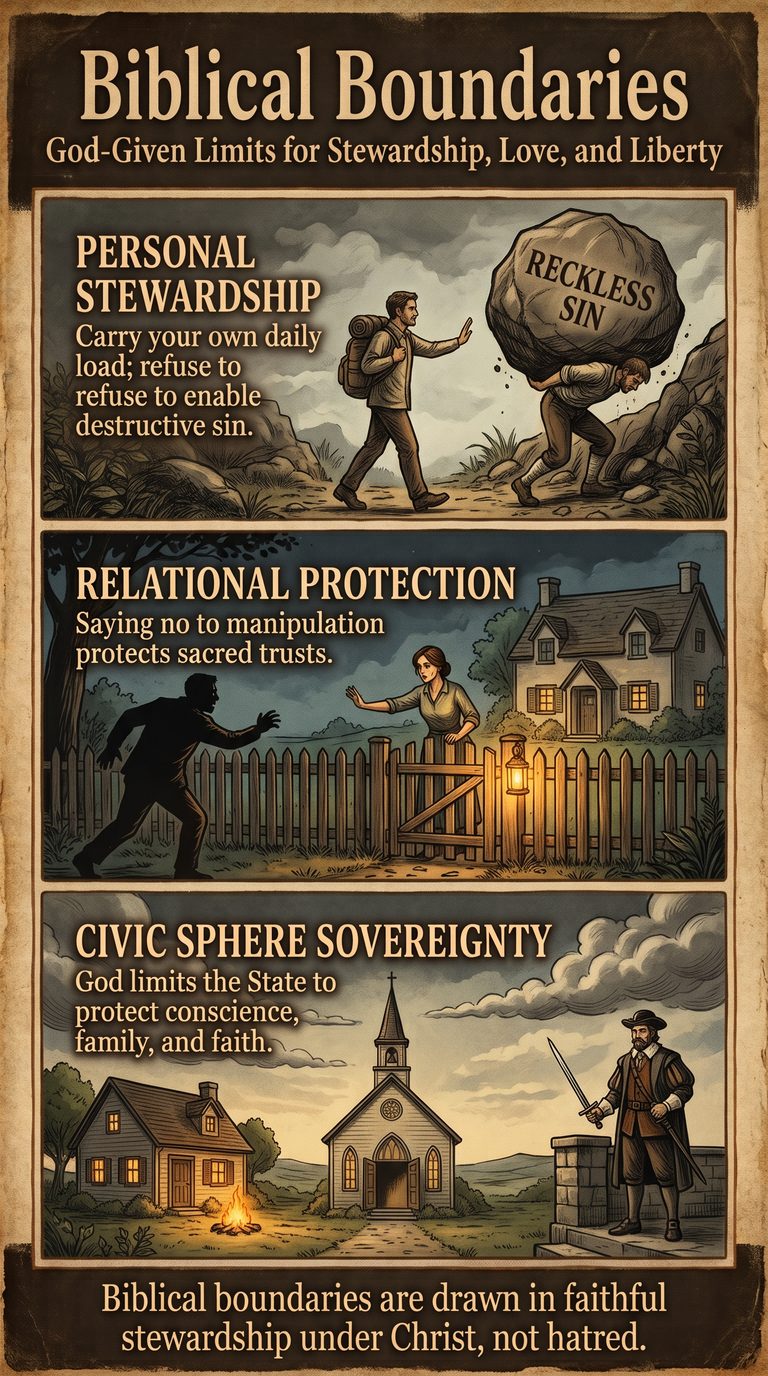
Finally, from a political perspective, the sufficiency and finality of the biblical canon protects humanity from the idol of the messianic state. Because God has spoken finally and decisively in His Word, no political party, bureaucratic planner, or civil magistrate has the right to rule over the human conscience or usurp the God ordained responsibilities of the family and the church.
When we open our Bibles, we are not opening a book of human suggestions. We are hearing the authoritative voice of the King of Kings. And because His Word cannot be broken, we must study it with everything we have.
Sources and References
- Holy Scripture: Luke 1:1-4; Luke 24:44; Romans 9:17; 1 Corinthians 14:37; Galatians 3:8; 1 Thessalonians 2:13; 2 Timothy 3:16-17; 2 Peter 1:19-21; 2 Peter 3:15-16
- Confessional Standards: Westminster Confession of Faith, Chapter 1 (Of the Holy Scripture); Belgic Confession, Articles 3-7
- Timothy Ward, Words of Life: Scripture as the Living and Active Word of God (InterVarsity Press, 2009)
- Herman Bavinck, Reformed Dogmatics, Volume 1: Prolegomena (Baker Academic, 2003)
- B.B. Warfield, The Inspiration and Authority of the Bible (Presbyterian and Reformed Publishing, 1948)
- Josh McDowell and Sean McDowell, Evidence That Demands a Verdict: Life Changing Truth for a Skeptical World (Thomas Nelson, 2017)