
The Cost of Regulation
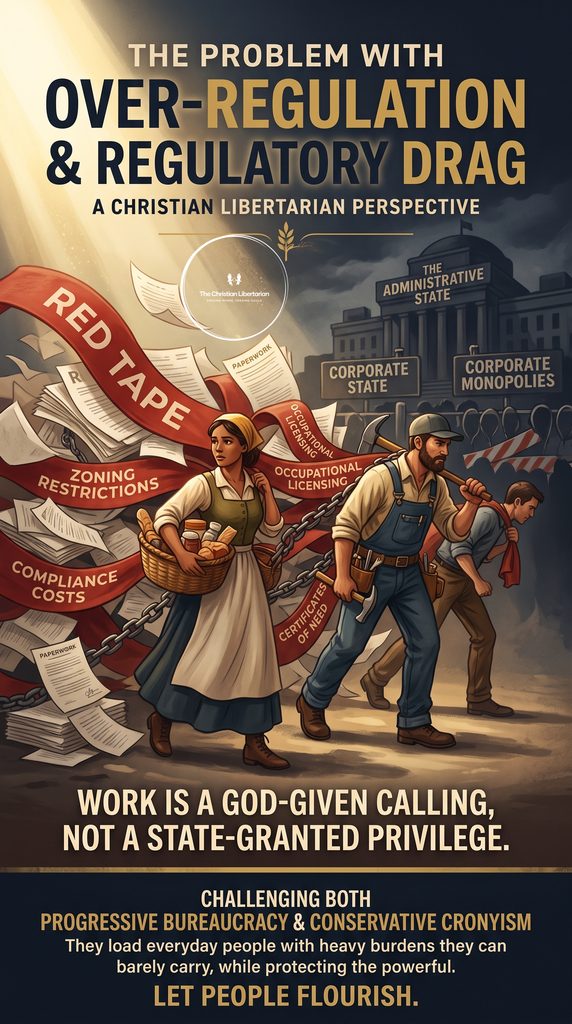
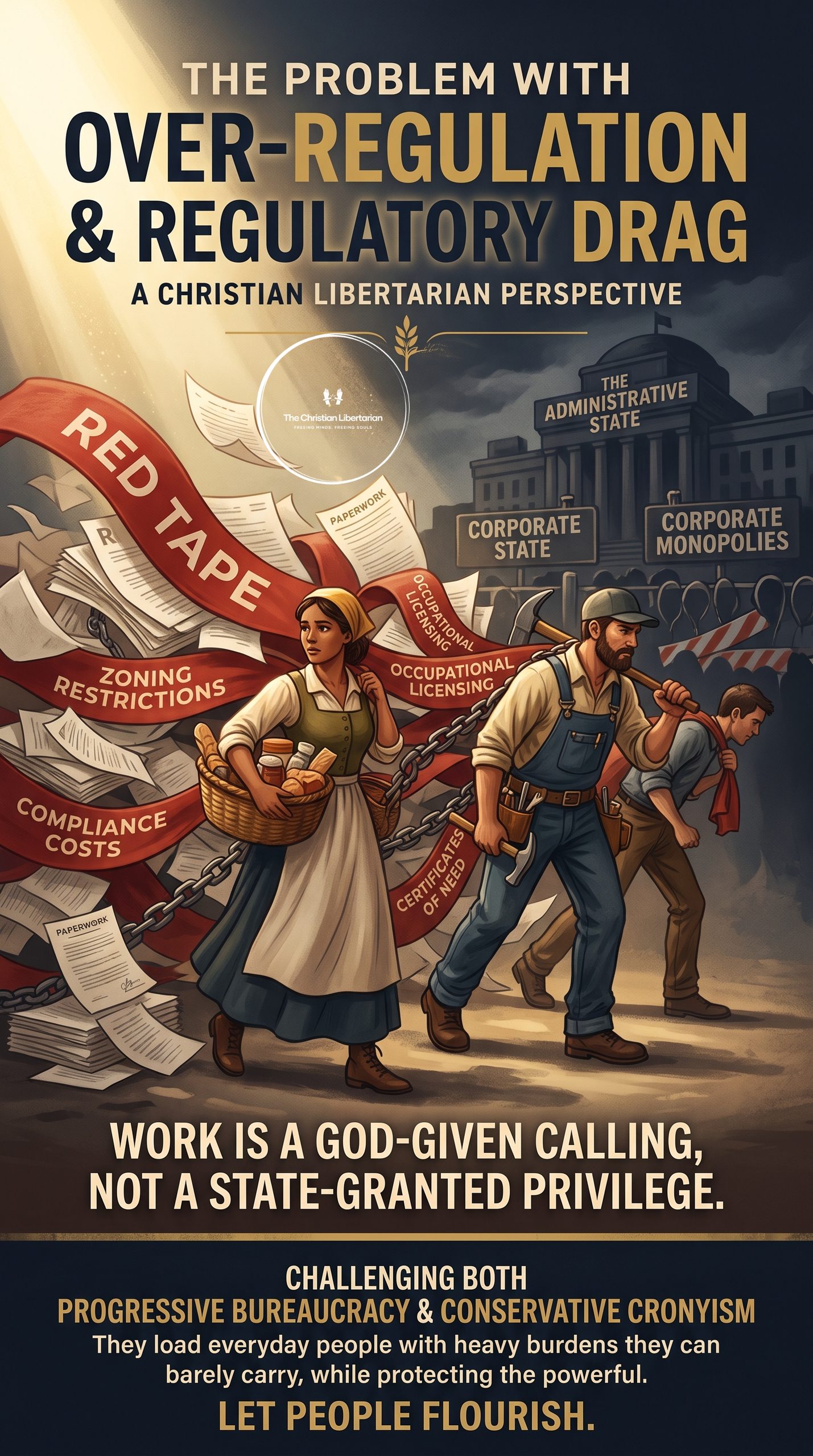
We often treat terms like “regulatory drag” as bloodless economic abstractions—debates over Federal Register page counts, administrative compliance costs, or fractional GDP slowdowns. But stripped of bureaucratic jargon, over-regulation is fundamentally a moral question about justice, human dignity, and stewardship. When the state erects endless barriers between a person and their ability to earn an honest living, it is not practicing prudent governance; it is running an artificial tollbooth on human flourishing.
From a biblical perspective, work is not a concession from the state; it is an inherent part of the creation mandate to cultivate, create, and serve our neighbors. Christ reserved some of his sharpest rebukes for the legalistic gatekeepers of his day who “load people down with burdens they can hardly carry, and yet you yourselves will not lift one finger to help them” (Luke 11:46). That same dynamic defines the modern administrative state. Regulatory drag does not fall equally on everyone. A Fortune 500 corporation handles a 5,000-page mandate by hiring another compliance floor and amortizing the cost across millions of transactions. The mechanic trying to open an independent garage, the immigrant braiding hair, or the working-class family starting a home-based food business gets choked out before they ever write their first invoice.
This reality exposes the blind spots of both prevailing political orthodoxies.
Progressives genuinely want to protect the vulnerable, believing that an aggressive regulatory apparatus acts as a necessary shield against corporate exploitation. But the historical and empirical reality is almost exactly backward. Well-intentioned rules routinely succumb to regulatory capture, where dominant market players actively help write the regulations because they know compliance acts as a legal moat against dynamic, lower-cost competitors. By treating government agencies as neutral referees, progressives end up endorsing an administrative cartel that locks the working poor out of entrepreneurial self-sufficiency, raises the baseline cost of essential goods, and protects the very corporate monopolies they claim to oppose.
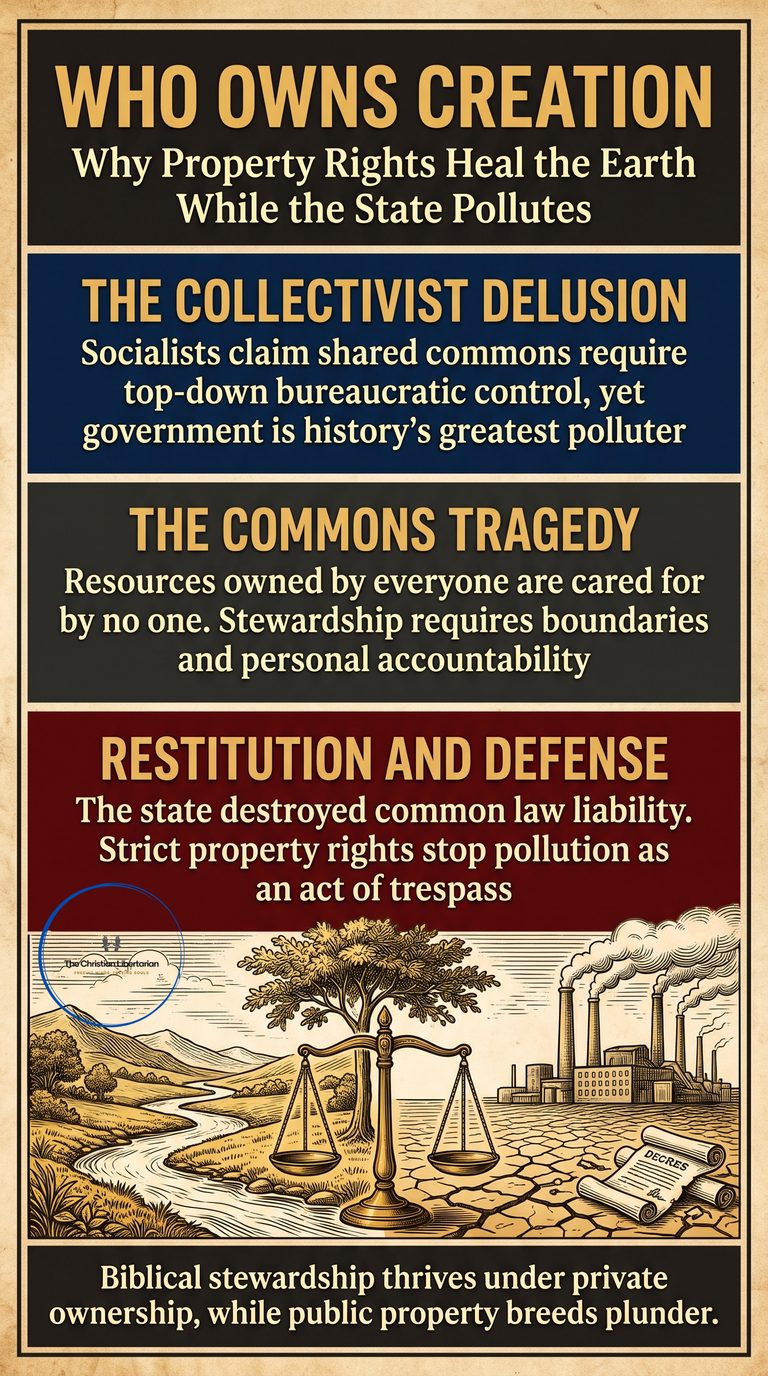
Conservatives, on the other hand, frequently claim the mantle of free enterprise while weaponizing regulatory drag whenever it protects their favored cultural or economic constituencies. Across the country, conservative-led jurisdictions aggressively enforce restrictive single-family zoning laws that destroy private property rights just to inflate incumbent home values. They maintain “Certificate of Need” laws that grant local hospital systems state-protected monopolies over medical care, enact occupational licensing schemes that insulate local trades from competition, and cheer for federal tariffs and industrial subsidies that pick winners at taxpayer expense. Championing deregulation only when it benefits established corporate allies while preserving protectionist moats is not free-market stewardship; it is state-sanctioned cronyism.
A coherent Christian libertarian view recognizes that loving our neighbor requires removing the state-enforced stumbling blocks that trap people in dependency and protect entrenched power. True justice demands an economic order where the measure is equal, the barriers to honest service are cleared away, and the powerful are not permitted to use civil law to insulate themselves from competition.
Immediate Steps for Regulatory Reform
- Audit Occupational Licensing at the State LevelRepeal licensing mandates for trades with no direct, demonstrable risk to physical public safety (e.g., hair braiding, interior decorating, landscape design) and replace them with voluntary market certification.
- Abolish Certificate of Need (CON) LawsDismantle statutory CON boards that allow incumbent hospitals and medical facilities to veto new healthcare clinics and equipment in their service areas.
- Enact Property Rights-First Zoning ReformLegalize by-right construction for accessory dwelling units (ADUs), duplexes, and mixed-use commercial space to restore owner autonomy and lower artificial housing scarcity.
- Implement Strict Regulatory Sunset ProvisionsRequire all administrative state rules to carry automatic five-year expiration dates unless specifically re-evaluated and reauthorized through affirmative legislative vote.
Sources and References
- Scriptural Foundation: Luke 11:46; Proverbs 20:10 (Condemnation of unequal weights and measures and arbitrary burdens).
- Economic Theory of Regulation: George J. Stigler, “The Theory of Economic Regulation,” The Bell Journal of Economics and Management Science (1971), establishing the mechanics of regulatory capture.
- Empirical Analysis on Regulatory Accumulation: Patrick A. McLaughlin, Nita Ghei, & Michael Wilt, “Regulatory Accumulation and Its Costs,” Mercatus Center at George Mason University (2019), documenting how cumulative regulatory growth disproportionately suppresses economic mobility and small-firm growth.
- Barriers to Work and Licensing Burdens: Dick M. Carpenter II, Lisa Knepper, Kyle Sweetland, & Jennifer McDonald, License to Work: A National Study of Burdens from Occupational Licensing, Institute for Justice (2nd ed., 2017).