
What if choices matter?
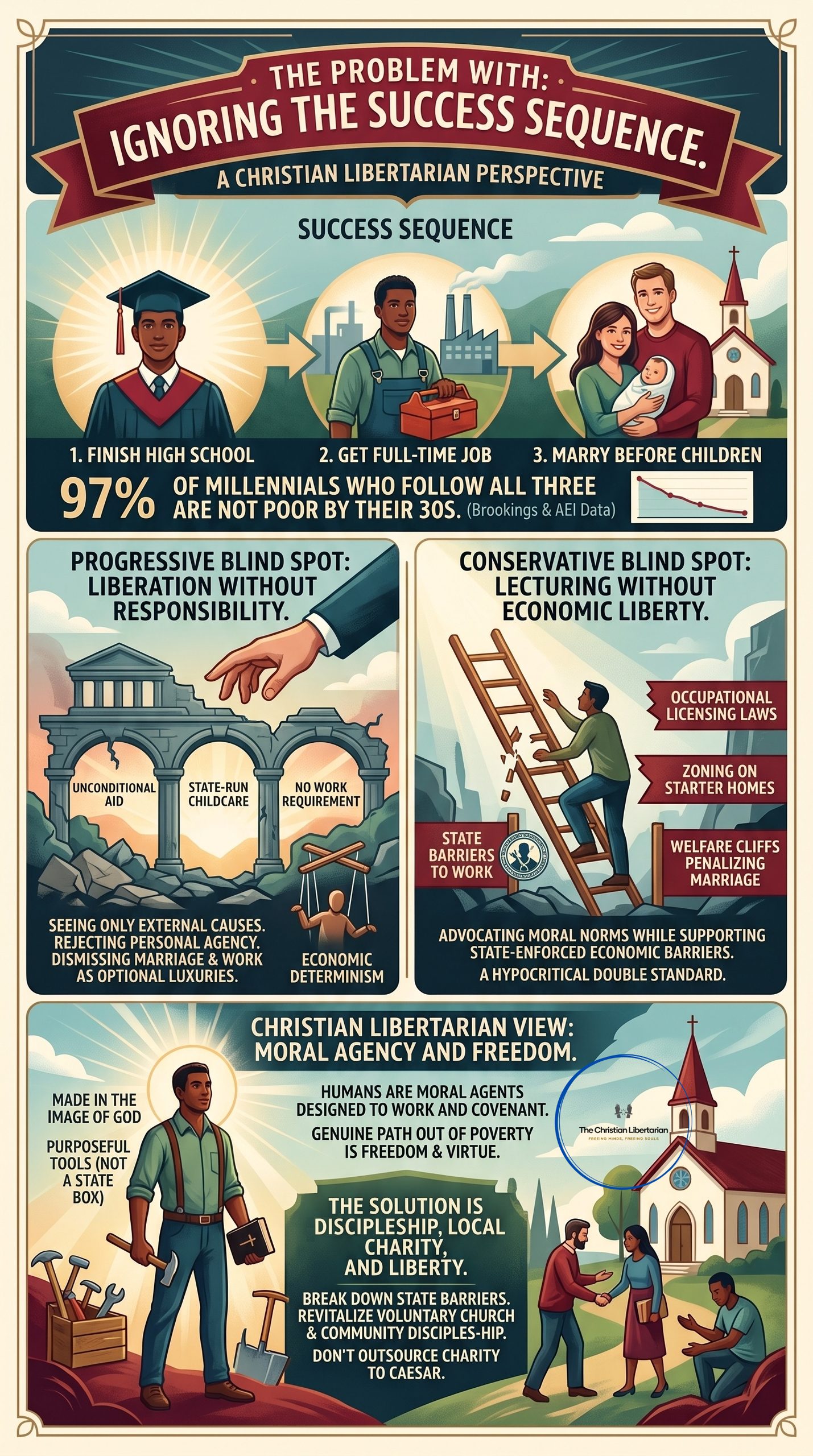
For decades, policy experts have debated why intergenerational poverty persists in the richest nation on earth. Billions of dollars in government interventions are poured into antipoverty initiatives each year, yet generational poverty remains remarkably entrenched in the exact same neighborhoods. In response, social scientists uncovered an empirical pattern so consistent it became known as the “Success Sequence.” The premise consists of three straightforward steps: graduate from high school, get a full-time job, and get married before having children.
The data behind this sequence is staggering. According to research from the Brookings Institution and the American Enterprise Institute, 97% of Millennials who follow these three basic steps are not poor by the time they reach their late twenties and early thirties. Only about 2% to 3% of young adults who finish school, work full-time, and marry before having kids find themselves below the poverty line. Even more compellingly, this holds true across every demographic background: among young adults who grew up in the lowest income quintile, over 70% make it into the middle class or higher if they complete the sequence. Conversely, for those who miss all three steps, the poverty rate spikes above 50%.
Despite these undeniable outcomes, the success sequence has become a political battleground, largely because it exposes the deep blind spots of both the progressive left and the conservative right.
Progressives routinely dismiss the success sequence as moralistic victim-blaming. The prevailing progressive narrative insists that poverty is purely an issue of external, systemic oppression and resource deficits, arguing that expecting individuals to follow personal behavioral norms ignores structural inequity. In this worldview, personal agency is minimized, and the solution is always an expanded government safety net: universal child allowances, state-run childcare, and unconditional cash transfers that effectively bypass the need for work or marriage.
Yet severing personal flourishing from personal conduct denies human agency and biblical reality. Scripturally, human beings are moral agents created in the image of God (Imago Dei), endowed with purpose and responsibility. God designed family structure and labor not as arbitrary societal conventions, but as covenantal institutions essential for human flourishing. When progressives suggest that marriage and work are optional luxuries that the state can simply replace with a welfare check, they ignore that fathers, mothers, and meaningful vocation provide social and spiritual capital that a distant bureaucracy cannot replicate.
A few years ago, I mentored a young man named Jordan. Jordan grew up in a fractured home where neither parent worked steady hours and marriage was nonexistent. By nineteen, he had dropped out of school and was fathering a child out of wedlock with his girlfriend, relying on Medicaid, SNAP, and under-the-table cash to stay afloat. Jordan was not lazy, but he had never seen anyone navigate adult responsibility. What transformed his life was not another state assistance check. It was an older couple from our church community who stepped into his life. They helped him pass his GED exam, helped him get a steady entry-level job at an HVAC shop, and counseled him and his girlfriend through premarital discipleship until they committed to each other in marriage. Ten years later, Jordan owns his own contracting business and provides for three children in a stable, two-parent home.
Jordan’s breakthrough required personal agency and moral structure, but it also required overcoming hurdles that conservatives frequently ignore.
Conservatives love to preach the success sequence from the rooftops, treating it as an individualistic bludgeon to lecture the poor, while remaining blind to how government intervention actively undermines people trying to complete those exact steps. The conservative establishment champions “family values,” yet routinely protects economic policies that sabotage young families.
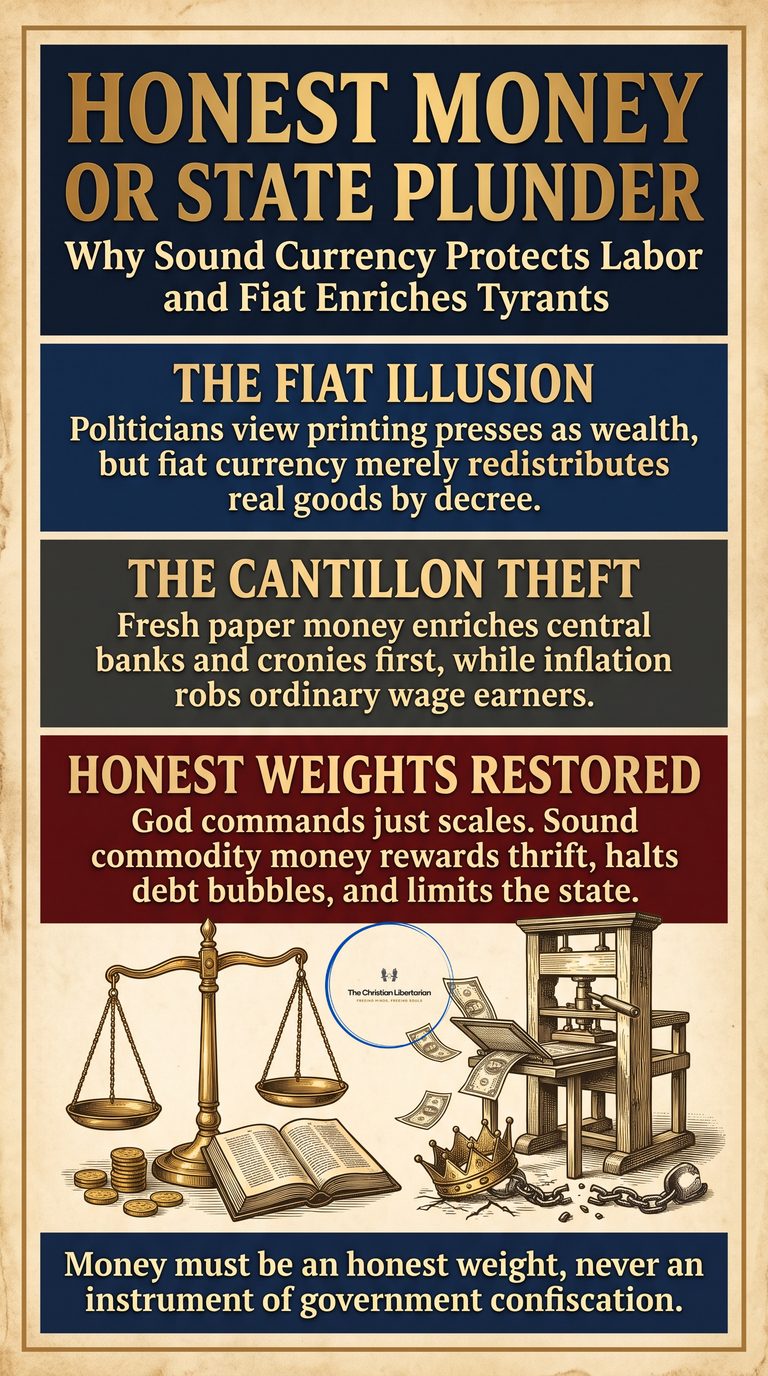
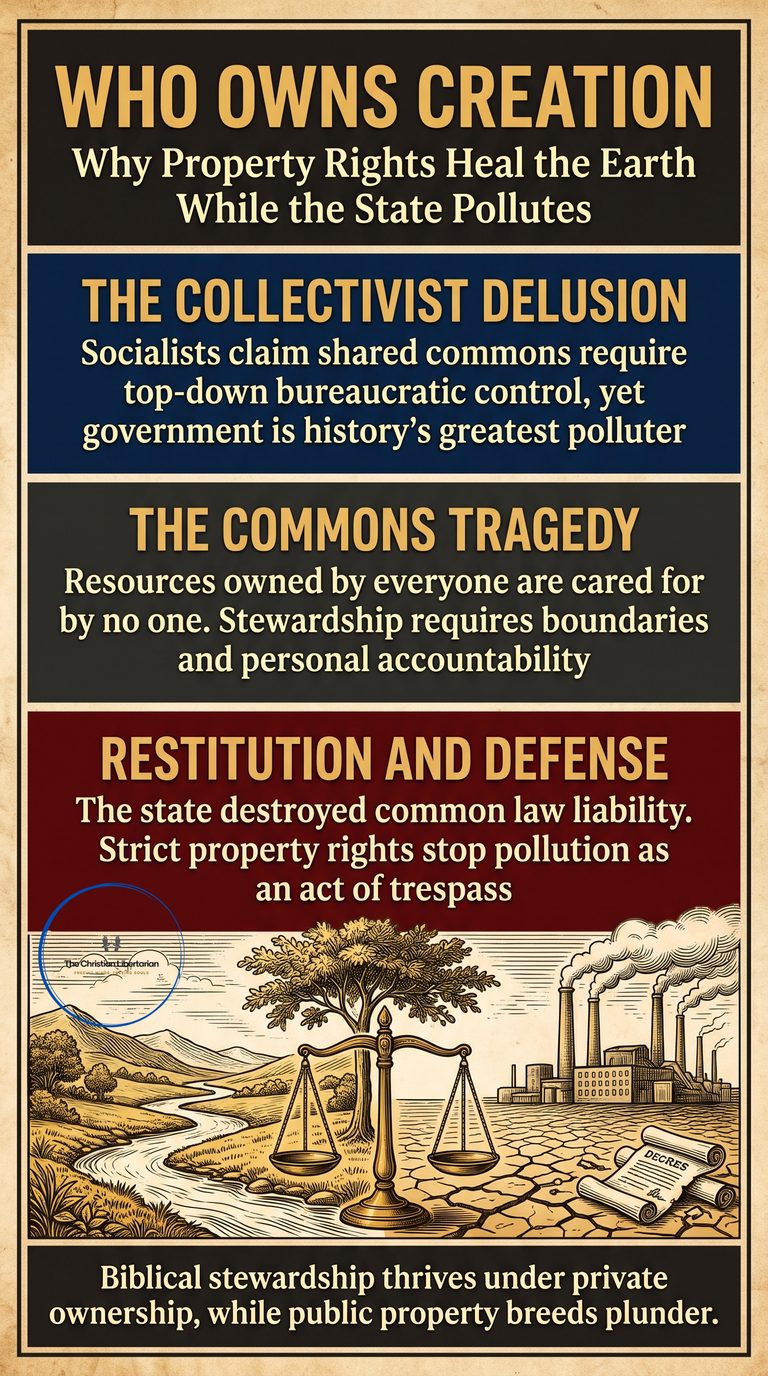
Consider the modern economy: state-enforced occupational licensing laws bar low-income young men without college degrees from cutting hair, fixing air conditioners, or driving commercial vehicles without thousands of dollars in fees and hundreds of hours of classroom bureaucracy. Local zoning laws make it illegal to build entry-level starter homes or duplexes, pricing young married couples completely out of homeownership. The Federal Reserve’s endless fiat expansion debases the currency, driving up the cost of living and eroding the entry-level wages young men need to provide for a household. Most egregiously, the state’s means-tested welfare apparatus imposes punishing welfare cliffs: when a low-income father moves in with the mother of his child and marries her, their combined household income often causes her to lose thousands of dollars in housing, food, and childcare aid. The state effectively penalizes marriage and financially subsidizes the absence of fathers.
Conservatives who want to lecture people on marriage and work while defending the corporate-welfare state, regulatory moats, and marriage-penalizing welfare formulas are ignoring systemic economic barriers. It is completely hypocritical to tell a young man to “get a job and get married” while supporting zoning laws that price him out of housing and occupational boards that ban him from working.
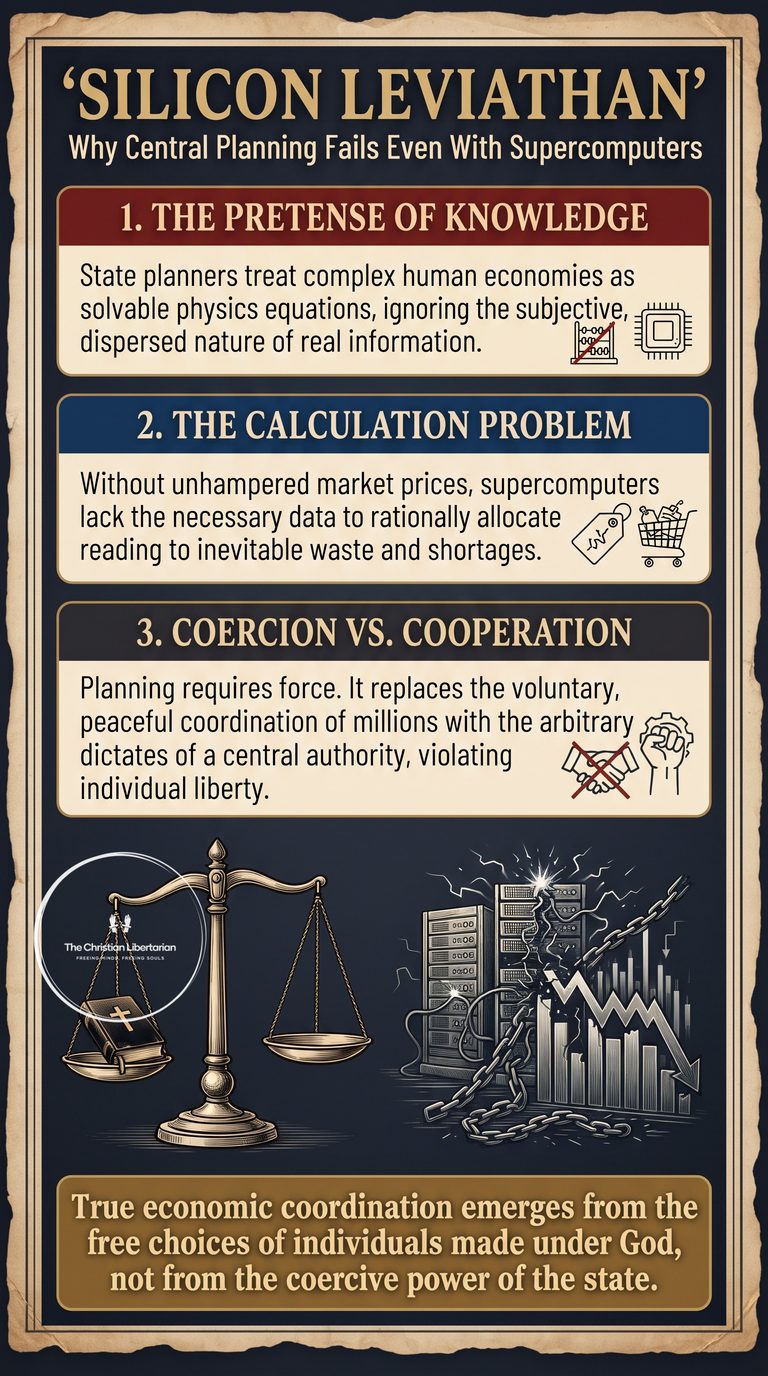
From a Christian libertarian perspective, the lesson of the success sequence is twofold. First, God’s moral design for human flourishing—education, diligent labor, and the sacred covenant of marriage—cannot be engineered away by the welfare state without disastrous human consequences. Second, the state has no business acting as a central planner or moral police. The genuine path out of poverty does not involve state coercion or federal allowances; it requires breaking down government barriers so people can work, earn, and build, while revitalizing the voluntary institutions of church, family, and local charity that disciple individuals to walk in wisdom.
Sources:
- Haskins, R., & Sawhill, I. (2009). Creating an Opportunity Society. Brookings Institution Press.
- Wang, W., & Wilcox, W. B. (2017). The Millennial Success Sequence: How Education, Work, and Marriage Protect Young Adults from Poverty. American Enterprise Institute and Institute for Family Studies.
- Wilcox, W. B., Wang, W., & Muehlenberg, R. (2022). The Power of the Success Sequence: Findings from the 1997 National Longitudinal Survey of Youth. American Enterprise Institute.
- U.S. Census Bureau. Current Population Survey: Poverty Status of Families by Type of Family and Presence of Related Children.
- U.S. Department of Health and Human Services (HHS). Welfare Rules and Marginal Tax Rates: The Impact of Means-Tested Benefit Cliffs on Upward Mobility.