
Our modern culture has an extremely difficult time making sense of pain. The secular mindset views suffering as an absurd, mechanical malfunction that must be medicated, litigated, or engineered out of existence. Meanwhile, popular spiritual culture peddles a prosperity gospel of positive vibes and manifestation, treating affliction as a personal failure to generate enough faith. Both worldviews leave us defenseless when real grief arrives, because both assume that comfort is our birthright and pain is an unnatural mistake.
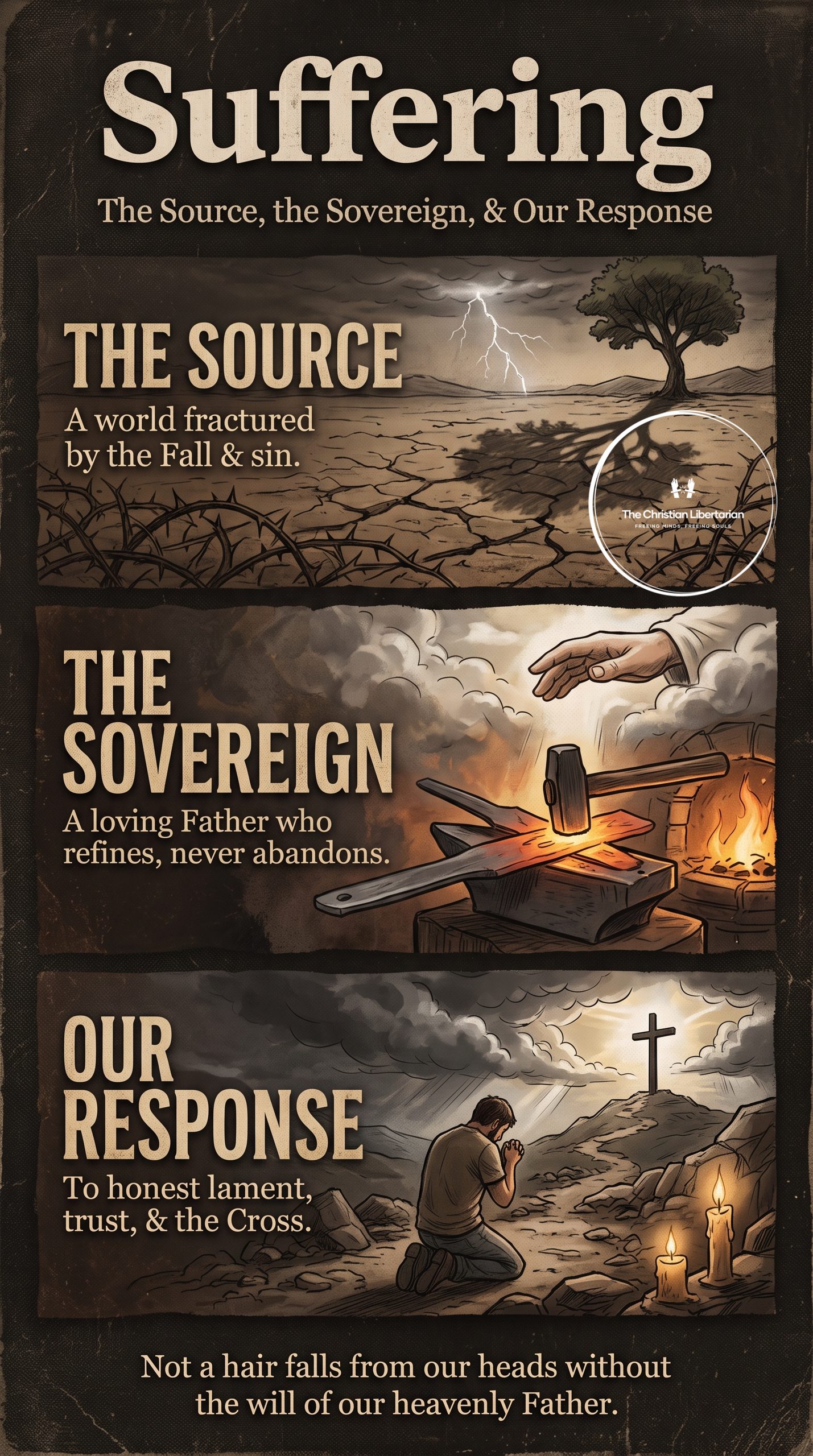
Scripture gives us a far sturdier foundation. From a Reformed perspective, the ultimate root of all suffering traces back to the Fall—humanity’s cosmic rebellion against God that fractured our relationship with our Creator, broke the physical world, and corrupted the human heart. Yet within that broken world, God’s Word reveals that affliction is never random or meaningless. It is held firmly within the hands of a sovereign Father who governs all things according to the counsel of His will, using even the darkest trials to prune, refine, and redeem His people.
Because God is sovereign and good, our response to suffering cannot be escape or denial. The Bible models three crucial movements for a faithful response:
First, we are called to genuine lament rather than stoic numbness. Over a third of the Psalms are songs of raw grief, confusion, and crying out to God. Faith does not require putting on a polite smile or pretending things are fine. When Jesus stood before the tomb of Lazarus, He wept openly, even knowing He was about to raise him from the dead. Biblical lament is not unbelief; it is taking our genuine sorrow directly to God rather than bottling it up or medicating it away.
Second, suffering calls us to honest self-examination and repentance without falling into morbid moralism. Sometimes hardship is the direct consequence of our own sin, serving as God’s loving, corrective discipline to turn us back to life. But even when our pain is not the result of personal wrongdoing—like Job scraping his sores or the man born blind—affliction exposes our hidden idols of control, comfort, and self-reliance. It forces us to ask: do we love God for who He is, or merely for the earthly blessings He provides?
Third, we respond with active, patient trust in Christ’s redemptive purpose. We do not white-knuckle our way through affliction by sheer human willpower; we look to the cross. In Jesus Christ, God did not remain distant from our agony—He entered it. The Cross was the deepest suffering in human history, yet God turned it into the ultimate victory over sin and death. Because Christ suffered for us and rose again, we know that our present trials are not punitive damnation, but refining fire. They are conforming us to the character of our Savior and working for us an eternal weight of glory.
Suffering hurts, and God never asks us to call evil good. But in Christ, we do not grieve as those who have no hope. We can walk through the valley knowing that not a hair can fall from our heads without the will of our heavenly Father, and that He will one day wipe every tear from our eyes.
Sources:
- Bible: Genesis 3:16–19; Romans 8:18–28 (the Fall, cosmic brokenness, and providential redemption)
- Bible: Psalm 13; Psalm 42; Psalm 88 (the biblical practice of honest lament)
- Bible: John 11:33–36 (Jesus weeping at Lazarus’s tomb)
- Bible: Hebrews 12:5–11; 2 Corinthians 4:16–18 (loving discipline and the eternal weight of glory)
- Bible: Job 1:20–22; Job 42:1–6 (submission to God’s wise sovereignty amid unexplained trials)
- Heidelberg Catechism, Lord’s Day 1 & 10 (the Christian’s only comfort and the doctrine of providence)
- Westminster Confession of Faith, Chapter V (“Of Providence”)